
DC Everest board highlights virtual inclusion for homebound students
Get AI-powered insights, summaries, and transcripts
Subscribe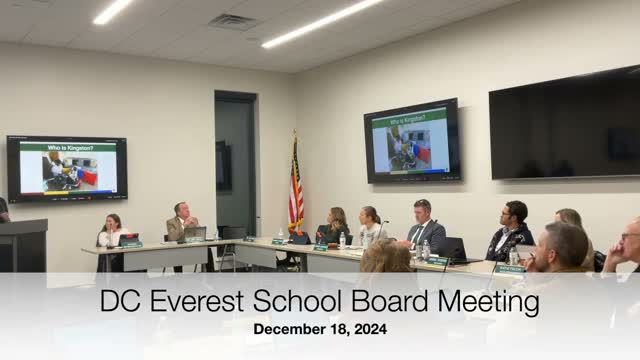
Summary
Board showcased two students using virtual and assistive technologies to stay connected to classrooms: a Weston kindergartner, Kingston, who joined morning meetings and showed new communication gains, and Devin, a high-school student using sip-and-puff assistive tech to access coursework.
The DC Everest Area School District board on Tuesday highlighted classroom inclusion efforts that use video and assistive technology to keep medically fragile students engaged with peers.
Parents, teachers and therapists described how Kingston, a Weston Elementary kindergartner unable to attend in person, now participates in morning meetings, music and classroom activities via a coordinated virtual setup. Tommy, Kingston’s father, recounted his son’s medical history and the difference virtual participation has made: “It’s something that’s literally has opened up a whole different world for him where he is part of something and he’s, very aware and active when it comes to watching his class,” he said.
Kelly Segalbar and teacher Joy (last name not specified in the record) described practical steps taken to include Kingston: staff provided an iPad connection, coordinated occupational and speech therapy, adapted meeting routines and created a weekly ‘travel box’ of classroom items the child could touch at home. Classroom teachers intentionally scheduled high-engagement activities—like counting songs during morning meeting—so Kingston would be able to access the most stimulating parts of the day.
The board also saw a video and a report on Devin, a high-school sophomore. The case manager said Devin is using assistive technology—moving from limited prior use to daily applications—so he can complete written assessments and increasingly participate in classes. The case manager noted progress is slow but promising and that broader goals include exploring insurance coverage for mobility and communication devices tied to the assistive tech.
Board members praised the collaborative effort across families, teachers and therapists and thanked staff for enabling students who cannot be physically present to remain part of school life. The presentations emphasized that the work involves trial and error—staff adapted platforms and updated procedures to ensure reliability and to protect the child’s wellbeing—and that the district sees the practices as models for inclusive programming going forward.
No formal action was taken; the presentation was part of the meeting’s mission-moment segment and the board moved on to its regular agenda.