Get Full Government Meeting Transcripts, Videos, & Alerts Forever!
Get email alerts on the Municipal Budget And Rates topic
No spam. Unsubscribe anytime.
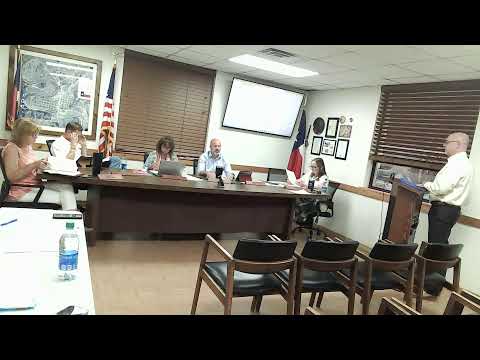
Bandera council advances draft budget with 1.5% utility‑rate proposal and 3% salary placeholder
Summary
At a July 9 budget workshop, the City of Bandera council directed staff to file a draft budget that includes a 1.5% across‑the‑board utility rate increase for planning purposes and a 3% placeholder for employee pay, while asking staff to return with comparables and a rate study before a final decision.
City of Bandera officials on July 9 reviewed a nine‑month budget update and tentatively approved a 1.5% across‑the‑board utility rate increase for the purpose of preparing the fiscal‑year budget.
City Treasurer Allison Wright told the council the city’s balance fell by about $200,000 in the most recent quarter, attributing the decline to a sewer‑line replacement that cost roughly $147,000, a $41,000 hotel‑tax reimbursement and a $5,000 payment to the fire department. Wright also reported several CDs matured and some funds transferred back into operating accounts.
At the budget workshop staff presented two rate options for water and wastewater: a 1.5% flat increase with conservation tiers left unchanged and a tiered alternative that raises rates progressively for high‑usage bands. Staff said the flat 1.5% residential projection would yield about $9,900 in new revenue when modeled against current receipts but cautioned that figure is an estimate because the billing system does not produce a ready report of customers by consumption tier.
Council members debated distributional impacts. Several members said the conservation tier should protect low‑usage and fixed‑income households from increases; others argued a steeper annual increase might be needed to catch up with deferred adjustments, citing an earlier rate study that recommended larger incremental steps. After discussion, the council voiced a consensus to use the 1.5% option in the draft filing and to direct staff to provide customer‑usage breakdowns, past rate history, and a formal rate study before any final adoption.
Council also discussed garbage fees and the vendor contract. Staff said the vendor has not provided a complete house‑count list for tote billing; the city plans a field verification and ongoing reconciliation with the contractor before charging additional totes. The current garbage pass‑through was described for budgeting as roughly a 5% change tied to the vendor contract set to take effect Oct. 1, 2025.
On personnel costs, staff presented a 3% salary placeholder for budgeting and recommended merit‑based dispersal by department heads. Council members were split: some supported targeted merit increases (especially for public‑works staff), while others urged postponing raises given capital needs such as streets and the wastewater project. The council directed staff to return with comparable jurisdictions and historical salary data to inform final decisions.
Staff flagged schedule milestones: the proposed budget must be filed with the city secretary by July 12 to meet public‑notice deadlines, with a tax‑rate public hearing planned Aug. 13 and budget hearings on Aug. 27 and possibly Sept. 10. Staff will supply the requested usage breakdowns, comparables and a rate‑study roadmap to the council for subsequent meetings.
The council did not adopt a final rate or wage policy at the workshop; it advanced the 1.5% scenario for the draft filing and asked staff for additional analysis prior to formal action.