Get Full Government Meeting Transcripts, Videos, & Alerts Forever!
Get email alerts on the Solar Ordinance topic
No spam. Unsubscribe anytime.
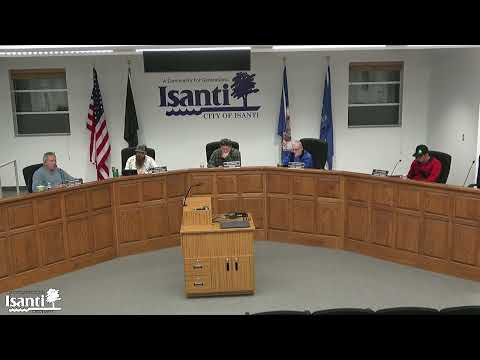
Isanti reviews draft solar ordinance covering residential systems, setbacks and bonds
Summary
Staff presented a draft solar ordinance to allow residential solar and regulate larger ground-mounted and community-scale arrays with setback, screening, habitat and financial-guarantee requirements; council asked clarifying questions and referred the draft to the planning commission for further review.
Speaker 8, who presented the draft, recommended that the city adopt a stand-alone solar ordinance to consolidate definitions and regulate roof-mounted and ground-mounted solar systems, residential installations and larger solar gardens.
Why it matters: The draft would add clear permitting and zoning language for solar in Isanti, including where and how arrays may be sited, height and setback limits, screening and beneficial-habitat requirements, and decommissioning/financial-guarantee provisions intended to protect the city from abandoned equipment.
Key provisions reviewed in the meeting included: - Permitted accessory use: Solar energy systems would be allowed as an accessory use in districts where structures are permitted, subject to requirements in the ordinance. - Height and mounting: The draft sets a 15-foot maximum for ground- or pole-mounted systems at maximum tilt and a 20-foot maximum for solar carports in nonresidential districts; roof-mounted systems would be limited so collectors do not extend beyond the building perimeter unless engineered to do so. - Lot size and thresholds: Speaker 8 proposed a 20-acre minimum parcel size for larger solar gardens and noted a production threshold (50 kW) that helps distinguish local projects from large utility-scale developments that are largely state-regulated. - Screening and visibility: Where systems are visible from the right of way, the ordinance would allow screening by fences or vegetation; screening fences would be 6–10 feet tall with at least 80% opacity, and planting plans would be required. - Habitat and maintenance: The draft requires maintenance of vegetated ground cover meeting state beneficial-habitat standards, a planting plan on application, panels set at least 36 inches off the ground to allow maintenance, and periodic compliance checks by the county soil and water conservation district. - Financial assurance and decommissioning: The ordinance would require a financial guarantee (letter of credit, cash deposit or bond) equal to up to 125% of the estimated cost to meet habitat standards to support future inspection and decommissioning.
Concerns raised: Speaker 6 questioned whether a 15-foot height limit is sufficient for commercial installations and warned of industry volatility and the risk that firms dissolve and avoid cleanup obligations. Speaker 3 suggested asking the city attorney about contract protections and whether state statutory changes could affect city remedies; Speaker 8 responded that large utility projects are subject to state bonding requirements that address decommissioning.
Process and next steps: Speaker 8 said the draft will return to the Planning Commission for further review of specific language (including whether to change 'encourages' to 'accepts' or 'tolerates'), and reminded the council that building, electrical and plumbing code compliance and utility interconnection remain separate requirements. No formal ordinance adoption vote occurred at the meeting.
All quotes and attributions reflect the transcript identification (e.g., "Speaker 8").