Get Full Government Meeting Transcripts, Videos, & Alerts Forever!
Get email alerts on the Ems Funding topic
No spam. Unsubscribe anytime.
Coalition of Greater Minnesota Cities warns of EMS shortfalls, outlines bonding and housing concerns
Summary
Elizabeth Bridal of the Coalition of Greater Minnesota Cities told Morris City Council that EMS providers in Greater Minnesota are strained, that CGMC sought $120 million in emergency EMS funding but the legislature allocated about $33 million, and that bonding and housing reform efforts failed or were deferred this session.
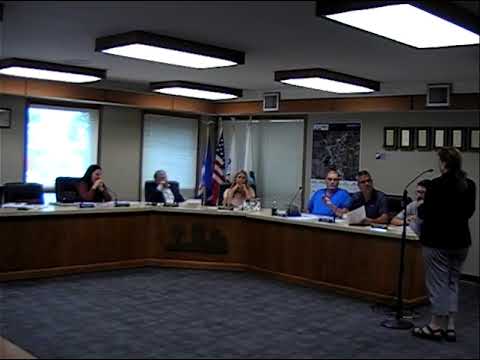
Elizabeth Bridal, a representative of the Coalition of Greater Minnesota Cities, told the Morris City Council on Aug. 14 that the 2024 Minnesota legislative session left many Greater Minnesota priorities unmet and called EMS capacity a statewide crisis. "We asked for a hundred and $120,000,000," Bridal said, adding that the legislature provided roughly $33,000,000, with about $9 million earmarked for pilot programs and about $24,000,000 directed to providers.
Bridal said the shortfall leaves some rural providers stretched thin and highlighted federal Medicare reimbursement rates as a structural problem: "A lot of those reimbursements are getting paid for by Medicare," Bridal said, arguing Medicare rates in many places do not cover the cost of providing EMS services. She urged residents to contact federal representatives on reimbursement policy and said CGMC will continue to press for higher reimbursements and a sustainable funding mechanism.
On bonding, Bridal said the governor proposed roughly $819 million in general obligation bonds and $169 million in cash, but the bonding bill failed. She said CGMC’s priorities included funding for drinking and wastewater projects, lead service line replacement, childcare infrastructure and BDPI business-development grants; she said the group will push again next session.
Bridal also described competing housing proposals that would have increased residential density in some areas (for example, allowing more units on lots zoned single-family and easing accessory-dwelling-unit rules) and said CGMC opposed statewide, one-size-fits-all mandates. "Land use reforms may make sense in a lot of places, but it needs to be done by the cities," she told council members, noting local infrastructure and parking constraints vary.
Bridal closed by urging cities to stay engaged with legislators and watch for a forthcoming CGMC EMS survey to document local impacts. The council thanked her and moved to regular business.