Get Full Government Meeting Transcripts, Videos, & Alerts Forever!
Get email alerts on the Academic Performance topic
No spam. Unsubscribe anytime.
Fairborn district rises to four-star state rating; officials credit literacy and support programs
Summary
Fairborn City Schools reported a jump to a four-star state rating after gains in gap closing, graduation and early literacy; district leaders credited expanded screening, targeted interventions and teacher supports for the improvement.
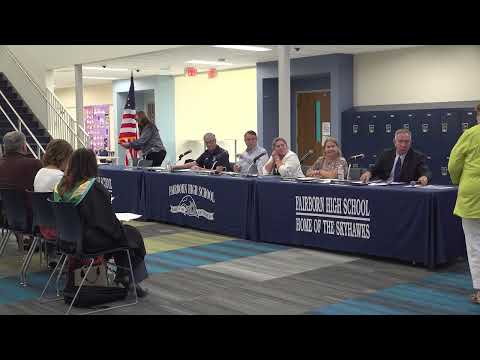
Fairborn City Schools announced it earned an overall four-star rating under the state’s 1–5 district report-card system, district officials said at the Oct. 3 School Board meeting.
Dr. Sue Brackenhoff, who presented the report card, said the district’s overall score moved from 3.5 to 4 stars and that Fairborn ranked 2nd of 21 demographically similar districts. “We scored 4 stars this year,” Brackenhoff said, noting the district showed particular improvement in the gap-closing measure (up to 5 stars), early literacy (from 2 to 3 stars) and graduation (from 2 to 3 stars). She cited a projected graduation rate of 94.1 percent compared with the most recently reported 91.1 percent.
Brackenhoff described a set of initiatives she and district staff link to the gains: universal dyslexia screening for kindergarten through fifth grade, implementation of the iReady universal screener three times a year, expanded AP course offerings with free AP testing to remove financial barriers, literacy and math instructional coaches, and additional supports within special education. “Early identification is the key to getting them the support that they need,” Brackenhoff said.
The superintendent’s presentation highlighted that while achievement and progress component star rankings held steady, growth within those measures occurred, and that sustained work on chronic absenteeism, graduation and early literacy underpinned the movement. The district also reported a 26 percent increase in AP passage rates and said it doubled AP enrollment and offered free AP testing to increase access to college credit opportunities.
The board and presenters framed the report card as the result of systemic, building-level efforts — especially targeted data meetings, coaching, and curriculum alignment — and emphasized the role of teachers and building leadership teams in the progress. The presentation closed with board congratulations and recognition of staff efforts.
The board did not take immediate policy action tied to the report card during the meeting; presenters described ongoing program work and training timelines (teachers are expected to complete required science-of-reading training by June 2025).