Get Full Government Meeting Transcripts, Videos, & Alerts Forever!
Get email alerts on the Education Attendance Staffing topic
No spam. Unsubscribe anytime.
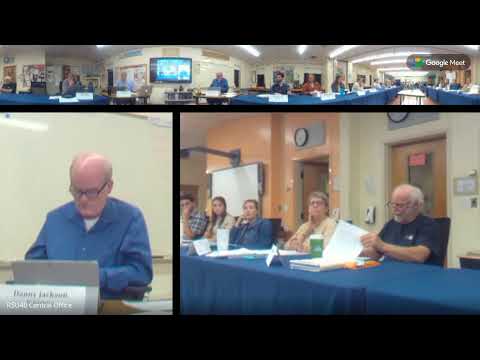
RSU 40 superintendent flags rising chronic absenteeism, staffing gaps and new safety steps
Summary
Superintendent Steve Nolan told the RSU 40 school board the district faces teacher and support-staff vacancies, renewed literacy training, and a persistent rise in chronic absenteeism since COVID; the district plans targeted tracking, communications and partner-supported interventions.
Superintendent Steve Nolan told the RSU 40 school board at its meeting that the district is starting the year with multiple staff vacancies, renewed literacy training for teachers and new preparedness supplies while also confronting an increase in chronic absenteeism that the district plans to address with targeted tracking and community partnerships.
Nolan said schools are open and staff returned last week; principals and custodial staff prepared buildings for students. He described summer literacy training for classroom teachers using My Perspective and SPIRE and said DIBELS will be used as an assessment and dyslexia screener. Nolan said administrators will review teacher feedback from those sessions and plan additional training during the October workshop day.
The superintendent outlined staffing shortfalls: the district currently lists six teacher openings, with candidates in process for three positions; support-staff vacancies include openings for bus drivers, custodians, educational technicians, food service and occupational therapy roles, and two candidates are in the pipeline for educational technician posts. He said the district will use substitutes where necessary while hiring continues.
On school safety, Nolan said the district bought "go kits" (backpacks with emergency supplies) and noted that some items such as tourniquets require specific training for staff. He described coordination with Candace Richards of Knox County Emergency Management on revisions to school emergency plans and said school-level teams will revise site plans and share them with staff.
Nolan identified chronic absenteeism as an immediate concern. Citing the Department of Education definition, he said chronic absenteeism is missing 10% or more of school days for any reason (about two days a month, which he said accumulates to roughly 18 school days). He said district data showed an increase during the COVID period from about 20% of students meeting that threshold to around 30%. "We are seeing a large number of students who continue to be chronically absent," Nolan said, and the district is working with Jess Anderson of Count Me In to develop three starting strategies: more granular school-by-school data tracking, an early-identification tracking system to prompt interventions, and a communication plan for families about attendance.
During board questions, members asked whether tardiness is tracked. Nolan said the district tracks tardies but noted the chronic-absence work focuses on full-day misses; "The tardies as well" are tracked, he said, while emphasizing that the main metric discussed was students missing the whole day.
The superintendent also described transportation challenges: three bus-driver vacancies remain, the district is operating 11 vans (including pre-K), and maintenance staff have temporarily driven some routes. He noted one new driver completed training and another is in training for evening sports routes.
The board did not take a new policy vote on these items during the meeting; Nolan said administrators would continue work on data and training and planned to return updates to the board as those efforts progress.