Get Full Government Meeting Transcripts, Videos, & Alerts Forever!
Get email alerts on the Deer Management topic
No spam. Unsubscribe anytime.
Georgia DNR outlines limits and options for urban deer control; council asks staff for archery program plan
Summary
A Georgia DNR biologist told Peachtree City officials fertility control and relocation are not legal or effective in Georgia and outlined urban archery and USDA sharpshooter culls as viable management options; council asked staff to return with a program and cost comparison.
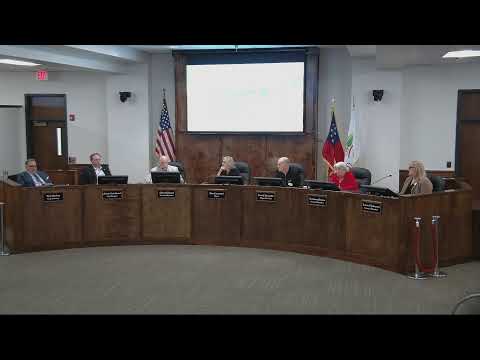
Peachtree City — Emily Rapac, a biologist with the Georgia Department of Natural Resources Urban Wildlife program, briefed council members on urban deer management and recommended options for Peachtree City's overabundant urban deer population.
Rapac described three carrying-capacity concepts — biological, ecological and social — and said nonlethal measures (fencing, hazing) often fail in dense suburban conditions. She told councilors fertility control is not an approved or practical option in Georgia and that relocating deer is illegal and highly lethal, citing studies finding high mortality for relocated animals. For lethal control she described two commonly used approaches: regulated hunting (archery) and USDA-contracted culls using sharpshooters; she noted Fort Yargo State Park and Forsyth County as local examples where management reduced collisions and ecological damage.
Council response and direction: Council members asked about liability, property-size limits, hunter selection and program cost. Rapac said private hunters generally impose no cost on the city (they take deer on private property with landowner permission), whereas USDA removals carry fees; organized public hunts must fall within state hunting seasons while USDA operations can occur outside those windows. Councilors asked staff to develop an urban-archery program plan (scope, green-space identification, hunter qualifications, safety protocols) and to include a USDA cost-comparison so council can weigh near-term and longer-term options.
Selected quote: Rapac said, 'Currently, neither of those are legal options in the state' when discussing fertility control and relocation, and later noted urban archery can be customized with education and proficiency requirements to ensure safety.
Next steps: Justin and staff will return with a program proposal and costs for both organized public-archery hunts and USDA removal options for council consideration.