Get Full Government Meeting Transcripts, Videos, & Alerts Forever!
Get email alerts on the Clear And Objective Standards topic
No spam. Unsubscribe anytime.
Bill seeks clear, objective local development standards; cities warn of one‑size‑fits‑all risk
Summary
SB 5,613 would direct Commerce to convene stakeholders and publish a model code of clear and objective development standards, require fully planning jurisdictions to apply those standards in urban growth areas by 2029, and create a cause of action for noncompliance; supporters say it increases predictability for builders while cities worry about litigation exposure and local context.
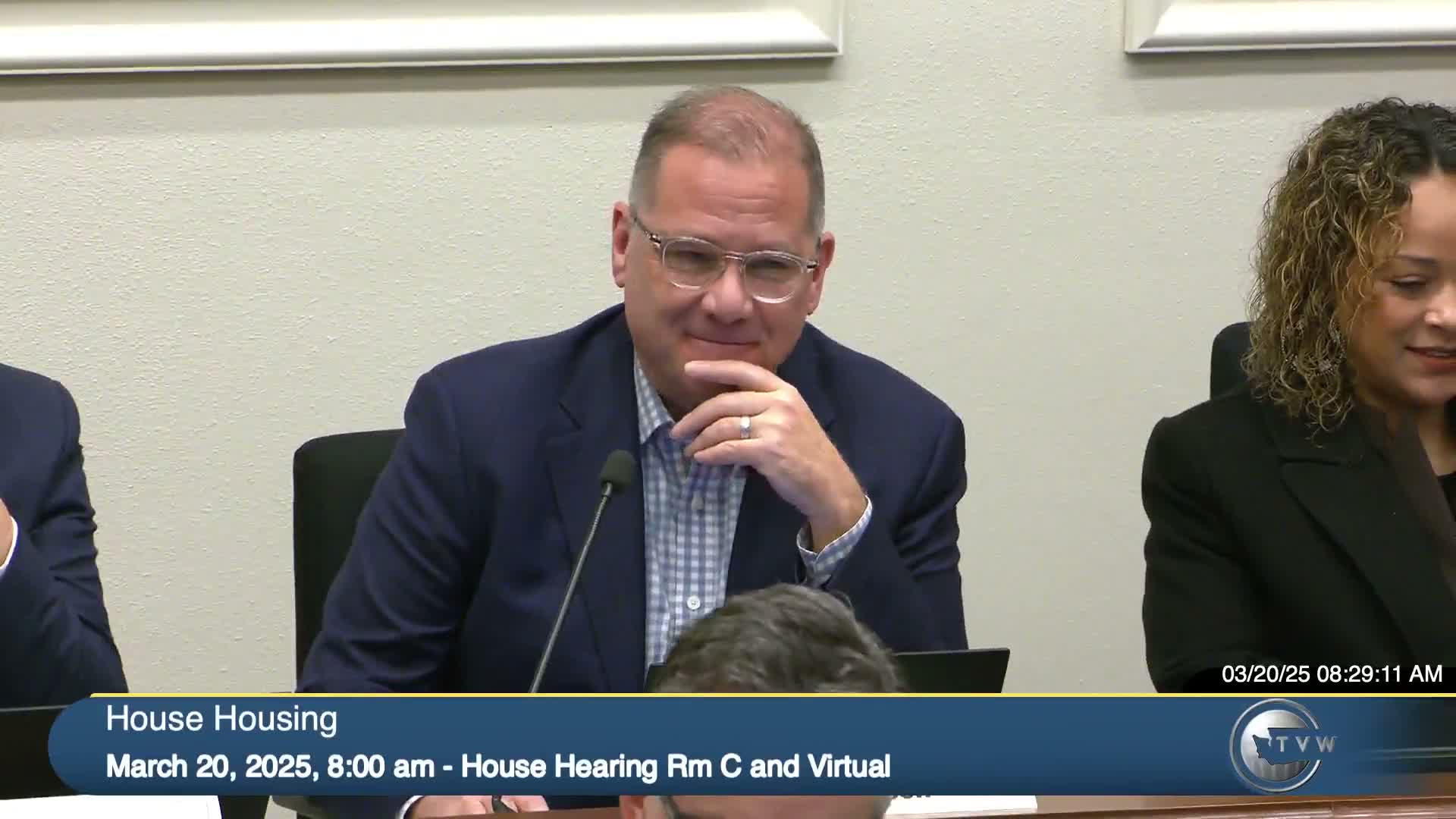
Lawmakers heard robust testimony on March 20 about SB 5,613, which would require all development regulations for residential development in urban growth areas to be clear and objective and would direct the Department of Commerce to develop a model code through a stakeholder process.
Sponsor Senator Jesse Solomon (recorded on the transcript at SEG 662) described the bill as a way to reduce permit uncertainty and subjective decisionmaking that can prolong approvals and raise costs. Solomon said the bill does not force cities to adopt the model code, but it creates a safe harbor for jurisdictions that adopt the Commerce model or substantially similar regulations; he emphasized a stakeholder process to avoid the decades of litigation experienced in Oregon.
Commerce’s Dave Anderson testified that the agency’s review role could work as a proactive dialogue before local adoption rather than a punitive after‑the‑fact determination by the Growth Management Hearings Board. Industry witnesses including the Master Builders Association and Building Industry Association supported clear standards for predictability. Joseph Tovar (former planning director) and others testified that clear and objective criteria help applicants and local staff know in advance what will be required.
Local governments and county associations such as the Association of Washington Cities and the Washington State Association of Counties raised concerns. Witnesses said a single model code may not fit communities as different as Seattle and very small rural counties; technical concerns included whether conditional uses and certain environmental review processes tied to federal law can be made purely objective. Witnesses asked for exemptions for conditional uses and for careful work group composition and more detail to limit liability exposure.
Committee members asked for examples of litigation from Oregon and requested follow‑up materials and potential amendments to clarify safe‑harbor mechanics and conditional use treatment. The hearing closed with committee staff scheduling and follow‑up requests; SB 5,613 is slated for executive consideration after requested clarifications.