Get Full Government Meeting Transcripts, Videos, & Alerts Forever!
Get email alerts on the Housing Accountability topic
No spam. Unsubscribe anytime.
Bill would give Commerce new role reviewing local housing plans and development rules
Summary
SB 5,148 would let the Department of Commerce review housing elements and development regulations — voluntarily or through a targeted review three years after a plan update — and create compliance timelines, minimum objectives and limited remedies if jurisdictions remain out of compliance.
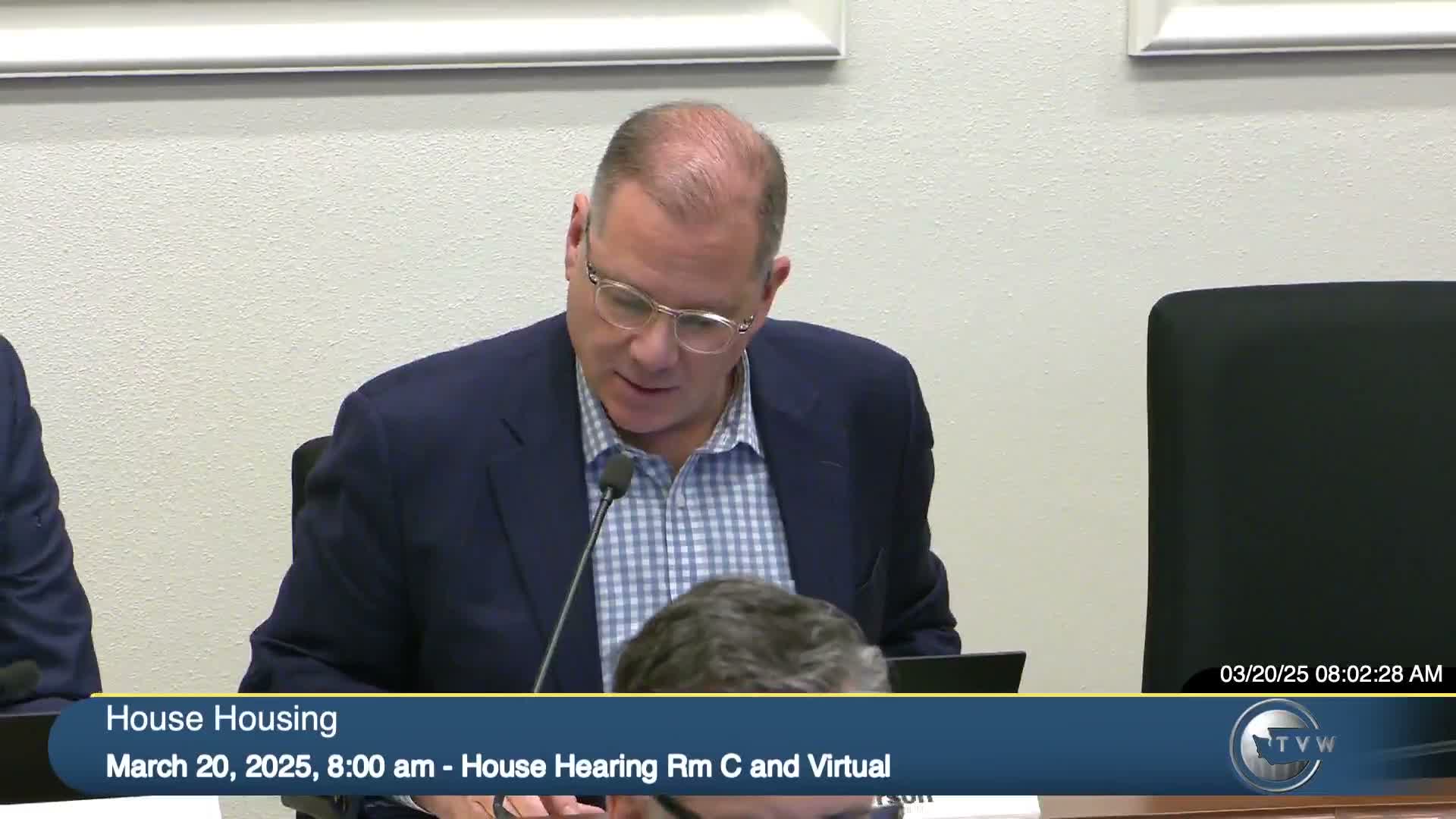
Senators and witnesses at the House Housing Committee hearing on March 20 debated Senate Bill 5,148, which would expand the Department of Commerce’s role in reviewing local housing elements and development regulations under the Growth Management Act.
Audrey Vazic, staff to the committee, told lawmakers the bill “allows a fully planning city or county under the growth management act to submit its housing element and any housing development regulations to the Department of Commerce for voluntary review at any time,” and requires a targeted review no later than three years after a jurisdiction enacts or updates its comprehensive plan. The bill would require Commerce to publish defined minimum objective compliance standards within six months of the bill’s effective date, Vazic said.
Sponsor Senator Bateman framed the bill as an accountability measure after a period of state law changes that legalized accessory dwelling units, middle housing and other housing types. “We need to build a million homes over the next 20 years,” he said, arguing that when cities adopt laws but keep implementation rules (development regulations) that make construction infeasible, state goals go unmet. Under the bill’s two‑track approach, jurisdictions could seek voluntary early review and a form of “defense protection” against appeals; jurisdictions that do not use the voluntary option would face a mandatory targeted review and compliance process after three years, Bateman said.
Commerce witness Dave Anderson described the agency’s current role as largely technical assistance: local governments now send notices or drafts and Commerce can provide comments but does not give formal thumbs‑up or thumbs‑down on every adoption. Anderson said Commerce sees the proposed review working best as a dialogue with local governments before adoption, unlike the Growth Management Hearings Board process which typically reviews plans only after adoption and cannot prescribe how to fix them.
Supporters including the Master Builders Association and Building Industry Association said the bill would increase certainty for builders and help align local ordinances with prior state housing laws. Advocates such as FutureWise said a Commerce review process could reduce disparities in enforcement and help members of the public who lack standing or resources to bring Growth Management Act appeals.
Local governments and the Association of Washington Cities expressed concerns about the bill’s mandatory elements, potential delays from additional review time, fiscal impacts on Commerce (witnesses cited estimated new FTEs and costs in testimony), and the risk of exposing jurisdictions to litigation if a new legal standard for “compliance” is not clearly defined. Carl Schroeder of the Association of Washington Cities said the record shows relatively few successful GMA challenges and warned that the bill assumes jurisdictions will not follow the law without state oversight.
Committee members asked Commerce to follow up with data on which jurisdictions currently request technical assistance and whether those comments are incorporated in local code changes. Several members requested additional detail on how Commerce would implement the 120‑day notice and the three‑year targeted review timeline included in the bill text.
The committee suspended the SB 5,148 hearing after testimony from the signed‐in witnesses and moved to other bills on the agenda. The committee asked staff and witnesses for follow‑up information on data, timelines and fiscal impacts before further action.