Get Full Government Meeting Transcripts, Videos, & Alerts Forever!
Get email alerts on the Public Health topic
No spam. Unsubscribe anytime.
Cumberland County public health outlines prevention work; commissioners table a related grant authorization
Summary
Public health staff described a decade-long Maine Prevention Network grant focused on substance-use prevention, tobacco prevention and healthy eating/active living; commissioners asked for more data on costs and sustainability and voted unanimously to table authorization for a related county grant application (item 24086) for one month.
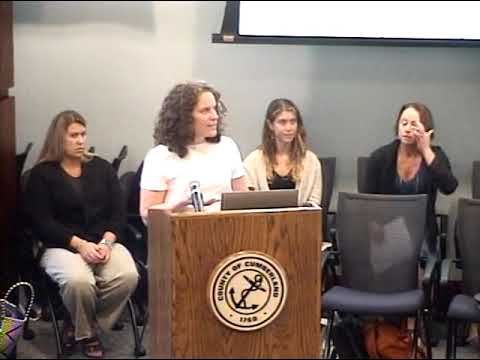
Bridgette O'Connor, the chronic disease prevention grant manager at the Cumberland County Public Health Department, told commissioners the county’s work under a 10-year Maine Prevention Network grant centers on health equity and three priorities: substance-use prevention, tobacco prevention and healthy eating/active living.
The presentation — delivered as the first installment of a new monthly department showcase — highlighted community partnerships and on-the-ground programs. O'Connor said the grant supports assessment, community engagement and collaboration with trusted local partners, and she said the department is ‘‘focused on those community conditions’’ rather than classroom health education. ‘‘We do a lot of collaboration. We convene folks. We bring them together and connect, to make improvements in the community,’’ she said.
Angela (last name not specified), who leads the county’s substance-use prevention program, described a strategic planning effort with Lake Region High School and community partners that brought students, school staff and partner organizations together to develop prevention strategies aimed at reducing vaping and improving student supports. The initiative prioritized ‘‘third spaces’’ for student connection, restorative accountability systems and on-site tobacco treatment resources, she said.
Alexis Guy, the county lead for Healthy Eating Active Living, outlined the Cumberland County Food Resources Coalition, formed in October 2023, and described coordinated work to help community navigators enroll eligible households in SNAP and to improve transportation access to youth programs. Guy said the coalition ‘‘meets regularly to hear from state partners, share updates and develop tools’’ intended to increase both the quantity and cultural relevance of food available to eligible households.
After the presentation, commissioners questioned the fiscal and operational implications of a separate grant application (item 24086) tied to prevention or treatment services. Several commissioners said they were open to pursuing grant funding but wanted clearer information on deadlines, program costs beyond the grant period and how wraparound services would be provided and sustained. One commissioner summarized the concern as: if the program cannot be funded after the grant ends, ‘‘don’t put something into place that you can’t continue and can’t fund.’’
Board discussion included specifics raised by commissioners and staff about program lifecycle, staffing and cost: one participant cited a projected annual cost of about $320,000, others pressed for outcome and cost-savings data, and several flagged the difference between distributing short-term prescriptions and providing longer-term treatment continuity for people leaving incarceration.
Facing those unanswered operational questions, the board moved to table the authorization to submit the grant application (item 24086) for one month to allow staff to return with more complete information. The motion passed unanimously.
What’s next: The county public-health staff will return with additional details requested by commissioners, including clearer budget implications and plans for sustaining services beyond the grant term. The tabling means the county will not submit the authorization for item 24086 until it reappears on a future agenda.