Get Full Government Meeting Transcripts, Videos, & Alerts Forever!
Get email alerts on the Doj Assault Kit Grant topic
No spam. Unsubscribe anytime.
Cumberland County accepts $2.496 million DOJ grant to inventory and test sexual-assault kits
Summary
The Cumberland County Board of Commissioners unanimously authorized the county manager to accept a $2,496,000 Department of Justice grant for a three-year assault-kit tracking and testing initiative, which will inventory local kits, adopt a tracking system and test applicable kits to support investigations and prosecutions.
The Cumberland County Board of Commissioners voted unanimously Dec. 2 to authorize the county manager to accept a $2,496,000 Department of Justice grant that will fund a three-year assault-kit tracking and testing initiative for the district attorney’s office.
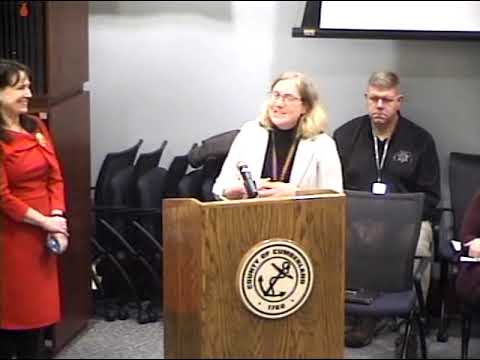
District Attorney Jackie Sartoris told commissioners the grant will support a full inventory of untested sexual-assault kits in the county, adoption of an existing statewide tracking system and testing of kits when appropriate. "It is a very substantial grant, almost $2,500,000," Sartoris said, and she credited assistant Tina Pinedis with leading the application effort.
Sartoris and Pinedis described the project steps: conduct a comprehensive inventory across jurisdictions, add Cumberland County to a laboratory tracking platform already used by other Maine counties, and send kits for testing through third-party laboratories with verified CODIS uploads. Pinedis said about 80% of Maine’s historical assault kits are currently unaccounted for or do not make it back to a lab, and the grant will help fill that gap. "Typically, the grant funders say leave about 6 months exactly for a very in-depth inventory," she said.
The presenters cited outcomes other jurisdictions have experienced: in comparable programs roughly 25% of tested kits produced some DNA hit, and 10–15% of those hits have linked to serial offenders. Sartoris said the work could identify perpetrators and advance criminal investigations and prosecutions: "It will then also enable us to see if we have serial perpetrators."
Commissioners asked about timing and public reporting. The DA’s office estimated an initial inventory phase of about six months and said it will provide written updates to the commission during the three-year grant period. The county manager requested and received authorization to accept the award after a motion; the board recorded a unanimous voice vote in favor.
The DA noted the office lacks an on-staff grant writer and said the application was assembled with county staff assistance and personal time from her assistant. The presenters said the $2,496,000 will not remain solely in the DA’s office: funding will pay for one full-time prosecutor, a specially trained investigator, and testing costs covered by contracted laboratories.
Next steps include finalizing interagency agreements for lab work, initiating the inventory and onboarding the tracking system; the DA’s office offered to return to the commission with progress updates.