Get Full Government Meeting Transcripts, Videos, & Alerts Forever!
Get email alerts on the Public Health topic
No spam. Unsubscribe anytime.
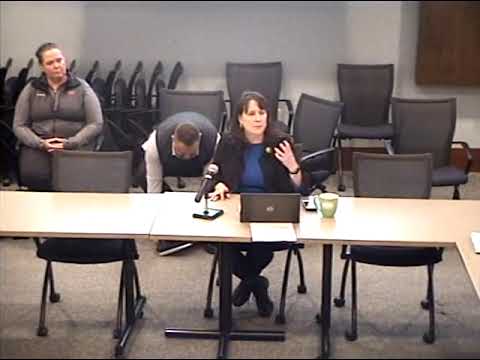
Cumberland County public health director seeks $300,000 to sustain grants and expand services
Summary
Public Health Director Liz Blackwell Moore told the Finance Committee the department runs primarily on grants (about $2.3M in 2024, roughly 90% of its budget), manages several multi‑year awards including a 10‑year prevention grant, and requested $300,000 to support 2.5 FTE and program operations to continue school oral‑health, substance‑use diversion and reentry work.
Liz Blackwell Moore, the county’s public health director, asked the Finance Committee to support a proposed $300,000 county investment to underpin personnel and operational costs as her department transitions from ARPA‑funded startup work to regular operations.
Moore said the department received approximately $2.3 million in grant funds in 2024—about 90% of its operating budget—and anticipates a similar level for the 2025–26 fiscal year. Large awards include a Maine Prevention Network grant that provides roughly $1.2 million in the coming year (part of a ten‑year program), a $700,000/3‑year Violence Intervention Partnership grant to improve victim‑centered domestic‑violence responses, and recurring opioid‑settlement funds estimated at about $215,000 per year for 17 years.
Moore described program priorities: preventive oral‑health services aimed at expanding school access, transportation planning grants to explore institutional bus‑pass models for low‑income riders, behavioral health coordination, and reentry supports for people leaving custody. She said much of the work is grant‑funded but emphasized the department’s role in coordinating county‑level public‑health strategy and building capacity in communities with the greatest barriers to health.
Committee members raised concerns about reliance on federal and one‑time ARPA funding; Moore and the county manager said they prioritized one‑time investments for infrastructure and aimed to minimize ongoing ARPA dependence. Moore said the department captures indirect costs for grants to modestly offset county overhead but sought additional county support to sustain staff and expand prevention work.