Get Full Government Meeting Transcripts, Videos, & Alerts Forever!
Get email alerts on the Public Safety Dispatch topic
No spam. Unsubscribe anytime.
Cumberland County 911 director reports expanded radio coverage, capacity limits and P25 migration
Summary
Melinda Fairbrother Dyer, director of the county’s Regional Communications Center, told the Finance Committee the center now serves 19 communities, handled about 101 911 calls per day last year, completed ARPA‑funded radio and center renovations, and is managing rising costs and equipment needs tied to hosted Axon storage and increased body‑camera data.
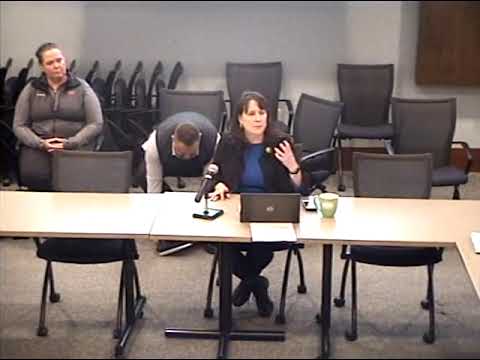
Melinda Fairbrother Dyer, director of Cumberland County’s Regional Communications Center, briefed the Finance Committee on the center’s operations and infrastructure investments, saying the 911 center provides dispatch services to 19 county communities and averages about 101 calls per day.
The center completed a renovation and a radio upgrade—the latter funded largely by ARPA and federal competitive grants—which provided 98 mobile radios, 540 portables and 348 licenses and upgraded nine towers to improve portable coverage. Fairbrother Dyer said the county turned on a P25 frequency and is helping communities test the new platform, but many towns still lack radios to use it.
Committee discussion focused on storage and third‑party services for body‑camera footage; the DA and others described a move to a hosted Axon system that holds county video and offers redaction and transcript tools. Fairbrother Dyer said the center can accept downloads from municipal departments but warned data and subscription costs, and shared‑frequency cultural barriers among towns complicate consolidation efforts.
Fairbrother Dyer also described operational limits: state law requires PSAPs to answer 911 only from a physical room, which constrains remote backup options, and the center’s capacity to add communities depends on towns agreeing to share frequencies and fund radios. She urged local collaboration to realize potential staffing and cost savings through frequency sharing and consolidation.