Get Full Government Meeting Transcripts, Videos, & Alerts Forever!
Get email alerts on the Juvenile Diversion topic
No spam. Unsubscribe anytime.
Bill to improve youth diversion data and allow successful diversions to be sealed advances in Human Services hearing
Summary
HB 1391 would remove successful diversions from juvenile criminal history, authorize restorative justice in diversion agreements, extend diversion eligibility to age 21 for offenses committed before 18, and fund an AOC researcher to standardize data collection and reporting.
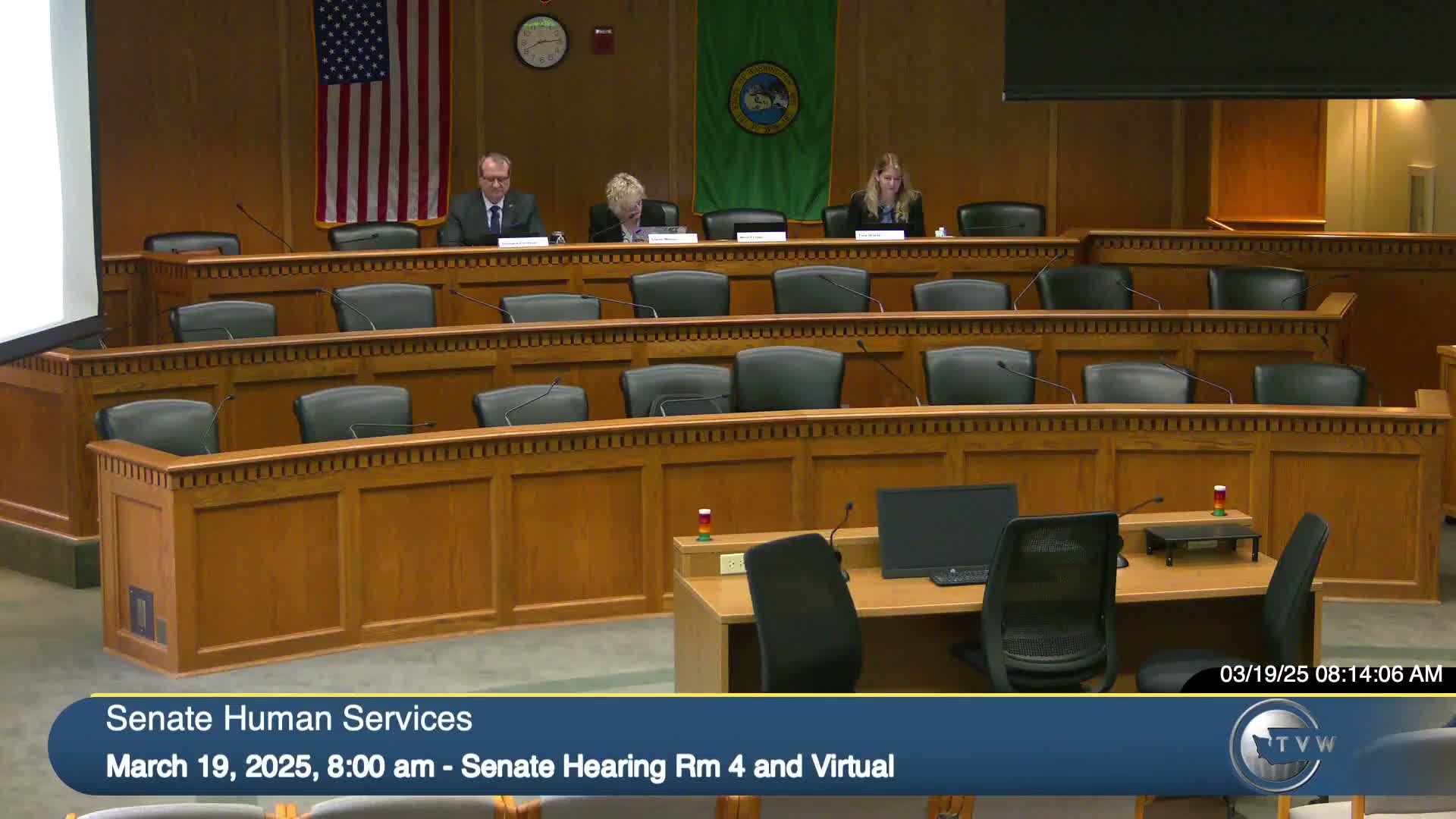
Representative Julio Cortez and committee staff told the Senate Human Services Committee that HB 1391 would strengthen diversion options for youth and create standardized statewide data to evaluate those programs.
Committee staff outlined key provisions: completed diversion agreements would no longer be part of a youth’s criminal history; restorative justice could be included in diversion agreements; the bill would extend the opportunity to complete diversions to age 21 for offenses committed before age 18; the Administrative Office of the Courts (AOC), in consultation with DCYF and juvenile court administrators, would develop common definitions and data collection methods and deliver an annual statewide report beginning 07/01/2026. The AOC provided a partial fiscal estimate of about $529,000 for the biennium to fund the staff and data work required.
"Diversion absolutely works," Representative Julio Cortez said, summarizing his experience working with at‑risk youth and citing lower recidivism among diverted youth. Supporters — juvenile court administrators, diversion providers, the AOC, TeamChild youth, and advocates — described diversion as cost‑efficient, community‑based and evidence‑supported. Linnea Anderson of the Washington Association of Juvenile Court Administrators said improved statewide data will help policymakers and program managers evaluate what currently works and where investment is needed.
Several members asked why the bill removes parental veto over diversion entrance; supporters said removing parental override is meant to ensure youth who would benefit from diversion are not blocked by toxic family dynamics and that participation remains voluntary for the youth. Witnesses urged the committee to preserve youth decision‑making while building resources for families and local diversion providers.
The committee closed public testimony after a multi‑panel discussion of program examples and data needs; no vote was taken during the hearing. Committee staff said additional written testimony is welcome as the bill moves through committee.