Get Full Government Meeting Transcripts, Videos, & Alerts Forever!
Get email alerts on the Criminal Docket topic
No spam. Unsubscribe anytime.
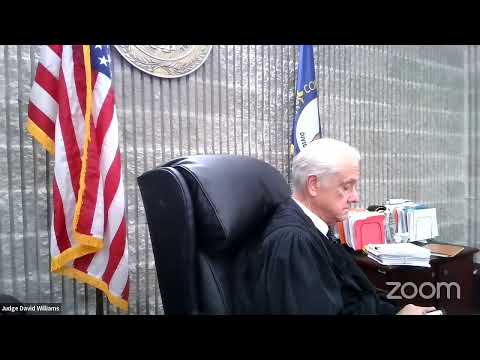
Clinton County court hears pleas, diversion agreements and probation revocation motions
Summary
At a multi-county criminal docket session, defendants entered guilty pleas, diversion agreements and the court scheduled numerous negotiation and sentencing dates; several defendants were referred to specialty court programs and the court addressed probation revocations and restitution shortfalls.
A Clinton County criminal docket session addressing cases transferred from multiple counties resulted in multiple pleas, diversion orders and scheduling for further hearings.
The court began by confirming identities and case numbers before moving through a packed docket of arraignments, pleas and sentencing. Several defendants entered guilty pleas or accepted diversion agreements. For example, a defendant who pleaded guilty to possession of a controlled substance received a three-year sentence that was probated for five years, and the court set court costs at $155 with a $30-per-month payment schedule. The judge repeatedly instructed defendants that completing diversion or specialty court programs could lead to dismissal or other outcomes specified in the plea agreements.
On consolidated matters, the court accepted the plea of Luther D. Connor to possession-related counts and imposed consecutive sentences that total eight years, with a portion to be served in jail (180 days) and the remainder probated and supervised. Several plea agreements requested or required referral to Clinton specialty court programs or long-term treatment if defendants did not qualify. In one case the Commonwealth noted 140 days already served, and the court ordered release to coincide with drug court orientation.
Counsel and the court dealt with procedural and scheduling matters: negotiation days were frequently set for Dec. 20 at 9 a.m., with follow-up appearances on Jan. 9. The judge instructed parties to file motions when they wished to modify bond or raise discovery issues and gave deadlines to elect consolidation of cases where defendants and counsel disagreed on whether separate matters should be tried together.
The docket also included motions to revoke probation for multiple defendants. In one probation-revocation matter, the Commonwealth reported a defendant was behind roughly $1,600 in restitution; the judge encouraged a near-term payment (the court discussed $800) and continued the matter with conditions for monthly payments and further review. Where additional information on out-of-jurisdiction arrests or pending charges was needed, the court postponed revocation hearings pending verification and set dates for additional proceedings.
In addition to criminal matters, the session resolved a civil motion for summary judgment in Midland Credit Management v. Upchurch; the court granted summary judgment on an unsecured claim and directed entry of judgment paperwork.
The court repeatedly emphasized that plea agreements are voluntary, reviewed constitutional rights with defendants before accepting pleas, and retained authority to impose harsher sentences if recommendations were not accepted. Most contested matters were continued for negotiation and further hearings rather than immediate revocation or sentencing, and the court closed the docket after instructing counsel on agreed orders and administrative follow-up.
The session concluded with a mix of immediate sentencing, deferred release tied to specialty court orientation, scheduled negotiation dates and instructions for counsel to circulate agreed orders on transfer or venue issues in pending civil litigation.
Next steps: defendants with negotiation or sentencing dates are to appear on the scheduled negotiation day (Dec. 20 at 9 a.m.) or the January calendar as directed; probation-revocation matters and probation compliance questions remain pending further documentation and payments as ordered by the court.