Get Full Government Meeting Transcripts, Videos, & Alerts Forever!
Get email alerts on the Elections topic
No spam. Unsubscribe anytime.
Randall County approves software to redact ballots and speed public-records requests
Summary
Randall County approved purchasing a ballot redactor ($13,000) and a ballot verifier ($2,000) to automatically redact personally identifiable information from scanned ballots and provide secure electronic access to cast-vote records; the measure passed unanimously.
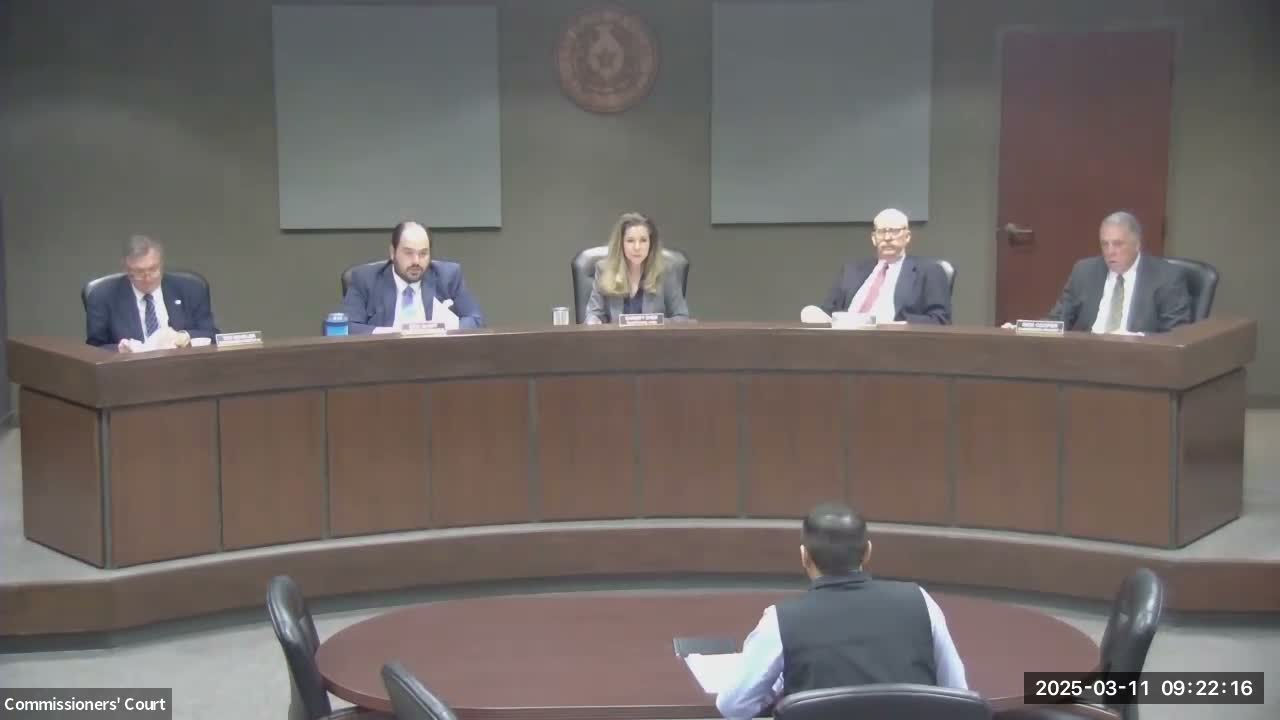
Randall County commissioners on the March agenda approved buying software to redact personally identifiable information from scanned ballots and to provide an electronic viewer for cast-vote records, saying the tools will speed public-records requests while protecting voter secrecy.
Elections staff told the court the county currently redacts records by hand and that the workload is increasing after recent transparency laws; they described a sample workload of about 27,000 ballots from the last election. "Currently, we are using an Adobe program to do the redact," said the county elections official (Speaker 11). Staff said the proposed system would perform redaction vastly faster: rather than the current multiweek manual process, the software would process images in minutes.
The county sought the products through the Tarrant County cooperative purchasing program. The vendor quote shown to the court priced a ballot verifier at $2,000 (first-year support included) and a ballot redactor at $13,000 (first-year support included). County IT staff said the verifier gives a secure link for public requests so requesters need not view physical images in person, and the redactor removes information that could be combined with other public data to identify how a specific person voted.
Elections staff warned about efforts to use public records to identify voters' choices. The county referenced an Attorney General ruling about what combinations of information can be personally identifiable: "The attorney general ruled that a precinct number, a date, the judge's signature on the back, the location that that ballot was cast is all personally identifiable whenever it's used with this other information," the official said (Speaker 11). The office described instances where requesters sought rosters and cast-vote records to try to pinpoint individual ballots.
Commissioners asked about timing and security. Staff said redaction will occur after each election is complete and that redacted images would remain available during the 22-month retention period; images become publicly available after 61 days. IT confirmed the county already stores scanned ballot images on encrypted media used at each polling location and that the software would operate on those existing images.
The court approved the purchase by unanimous vote (motion carried 5–0). The county judge thanked the elections team for their work and noted ongoing oversight by the secretary of state.
Next steps: staff will finish vendor on-boarding and complete implementation; commissioners said they expect lower maintenance costs in subsequent years once the one-time implementation is complete.