Get Full Government Meeting Transcripts, Videos, & Alerts Forever!
Get email alerts on the Utilities topic
No spam. Unsubscribe anytime.
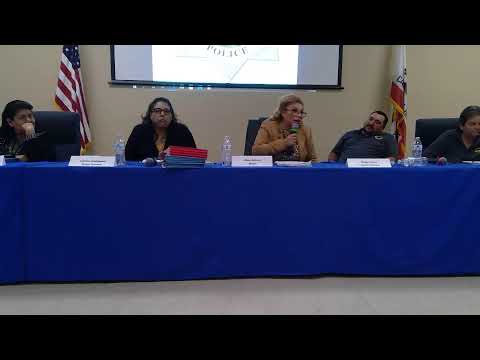
Parlier council orders water-rate study after heated debate over rate hikes and city solar system
Summary
Council directed staff to commission a defensible water-rate study and to investigate the city’s solar system after residents and council members challenged recent increases and the resolution language justifying them; staff said tiered rates are legally possible but require a detailed cost-of-service analysis and public engagement.
The Parlier City Council voted to commission a detailed water-rate study and to direct the acting city manager to check the city’s solar installation after a prolonged debate about recent increases on residents’ bills.
Javier (staff) and consultant Vikram Shaffer told the council that tiered and volumetric rate structures are permissible under state law, including the constraints of Proposition 218 and relevant sections of the California Water Code, but that tiered pricing is harder to legally justify and requires a cost-of-service study and careful documentation. The staff recommendation was to obtain a formal study, engage the public, and return with legally defensible options.
Several council members and residents pressed staff to explain why a roughly 12% adjustment remains in effect when the city has since received grant and settlement funds. Mayor said the bill increases were presented as necessary to cover system costs and a TCP (treatment) project, but some council members said the resolution language originally tied the increase to projects that have since been funded and asked whether continuing to charge the same percentage is transparent.
Council members also questioned a fee described in the rate schedule as a monthly “service fee” that appears large for certain meter sizes; staff and the city attorney said that meter-size-based fixed charges and volumetric charges are common but agreed the wording needed clarification so residents would not mistake the charge for a flat flat-rate bill.
Residents reported individual bills rising from about $150 to $200, far above what a 12% change would explain; staff said outliers can reflect leaks, meter issues or other factors and pledged follow-up. Council directed staff to: (1) solicit and contract a water-rate study that documents cost-of-service and explores tiered options and legal defensibility; (2) run a public-engagement process; and (3) have the acting city manager and utilities staff investigate the solar installation and any operational issues that could be increasing PG&E costs.
The council’s motion to pursue the study carried in a roll call after the discussion. Staff said the study will include cost modeling, comparisons with peer utilities and draft rate scenarios for subsequent public workshops.