Get Full Government Meeting Transcripts, Videos, & Alerts Forever!
Get email alerts on the Housing topic
No spam. Unsubscribe anytime.
Needles City Council adopts updated accessory-dwelling-unit ordinance to align with state law
Summary
The City of Needles adopted an updated ADU ordinance to bring local code into compliance with recent California state requirements, modifying size, parking, and use provisions and allowing certain ADUs as short-term rentals where state law permits.
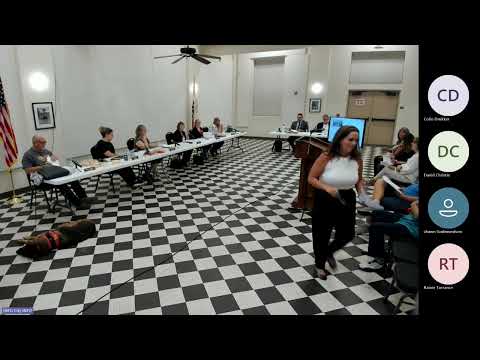
The City of Needles City Council on the evening’s agenda adopted an updated accessory-dwelling-unit ordinance intended to align the municipal code with changes in California law.
City Manager presented the ordinance and said the update standardizes definitions for ADUs and junior ADUs, adjusts size and parking rules to meet state requirements, removes local provisions that state law now prohibits, and clarifies that ADUs may, in some cases, be used as short-term rentals consistent with state guidance. Planning Commission had previously reviewed the measure and recommended unanimous approval, the manager said.
During the public comment period, a resident who received a mailed notice asked whether the ordinance would authorize property access for enforcement; staff clarified the notice was a hearing notice and that the ordinance concerns property owners’ rights to add ADUs rather than a code-enforcement site visit. The council also heard questions about travel trailers and accessory structures; staff said the ADU ordinance addresses new unit additions and not unrelated code-enforcement issues.
The council voted unanimously to adopt the ordinance. The city did not specify a printed ordinance number consistently in the transcript; the filing listed the item as an update to section 96 (table of permissible uses) and section 96.8 (dwelling units) of the Needles Municipal Code. The manager said the redline version was in the packet and the formal ordinance language will be reflected in the adopted code.
The council’s action is intended to keep the city’s zoning and permitting process in compliance with the Political Reform Act–related reviews and with state housing law; staff said the state review agency (California Department of Housing and Community Development) previously reviewed earlier versions and requested updates to reflect recent state code changes.
The council did not attach additional local restrictions beyond what state law permits. Next steps: the city clerk will publish the adopted ordinance and update the municipal code accordingly.