Get Full Government Meeting Transcripts, Videos, & Alerts Forever!
Get email alerts on the Mental Health topic
No spam. Unsubscribe anytime.
Butte County to explore supervised unlocked facility for felony IST cases after state award failed to secure a locked provider
Summary
After failing to find a provider for a locked 50‑bed restoration facility, the county accepted state guidance to repurpose a $4.6M award and directed staff to seek a supervised unlocked facility with strict risk assessment and supervision to serve some felony IST (FIST) individuals and other treatment needs.
Butte County behavioral health officials on Jan. 28 won board direction to search for a supervised, unlocked facility to house certain felony incompetency‑to‑stand‑trial (FIST) patients after RFPs failed to attract a viable locked treatment provider.
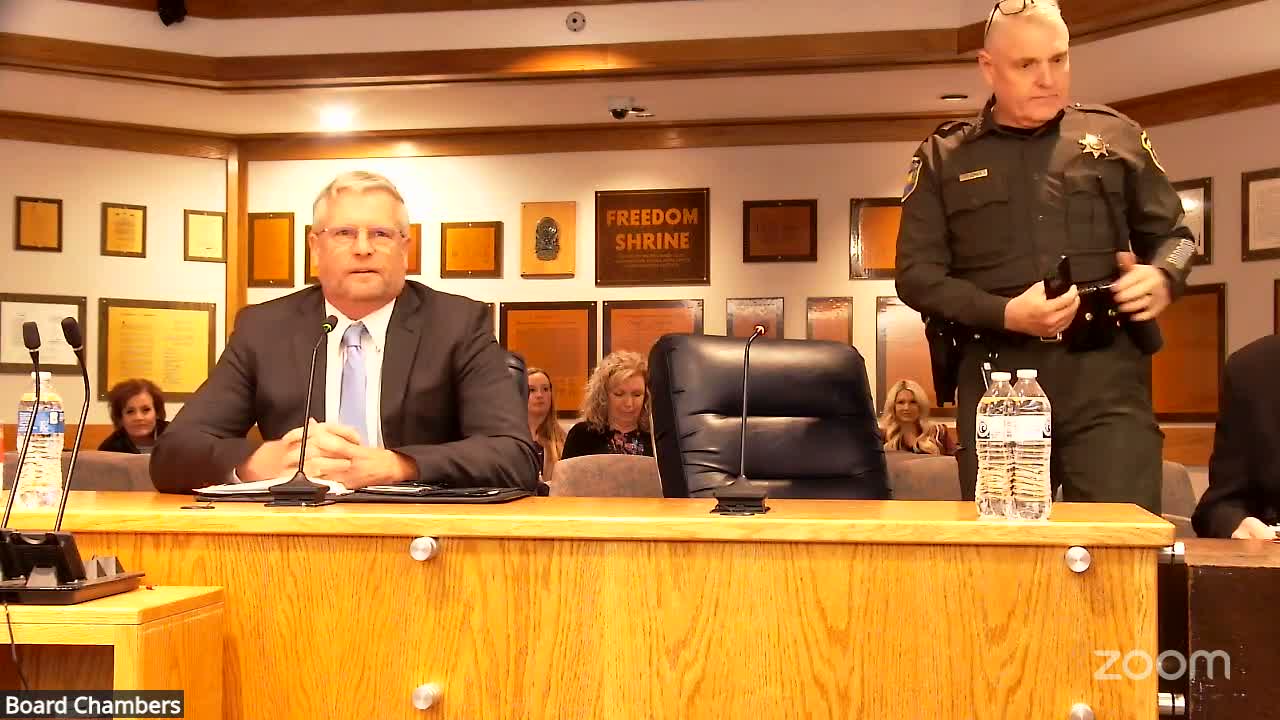
Scott Kennelly, director of behavioral health, briefed supervisors on a $4.6 million state award meant to support local alternatives to state hospital restoration. "We went out to RFP, not once but twice to find a provider that could potentially offer a 50‑bed locked inpatient facility ... We were not successful in finding providers to operate a local locked inpatient facility," Kennelly said. With the board's direction he asked to pursue an unlocked, supervised option instead of returning the funds to the state.
Sheriff and district attorney representatives told the board they support exploring a closely supervised unlocked facility, provided there are rigorous risk assessments and on‑site treatment. The sheriff noted the county had operated jail‑based restoration options and an Alternative Custody Supervision (ACS) program; those experiences informed the county's approach to supervision and public safety.
Kennelly said an unlocked facility model used by approximately eight other California counties typically repurposes motel‑style properties with on‑site treatment and correctional supervision. Treatment staff would provide medication management and counseling on site; supervision could involve probation or sheriff oversight and electronic monitoring. The state requires participating counties to use validated risk‑assessment tools to screen candidates.
Board members approved giving staff direction to pursue a property search and to work with general services, the sheriff and the district attorney to determine whether an unlocked, supervised facility is financially and operationally feasible using the existing award. Kennelly indicated the state was prepared to allow the county to propose this alternative in lieu of returning the award.
Next steps: staff will begin a property search and develop a detailed operational plan, including risk‑assessment protocols, supervision arrangements and budget projections, and will return to the board for approval.