Get Full Government Meeting Transcripts, Videos, & Alerts Forever!
Get email alerts on the University Taxation Resolution topic
No spam. Unsubscribe anytime.
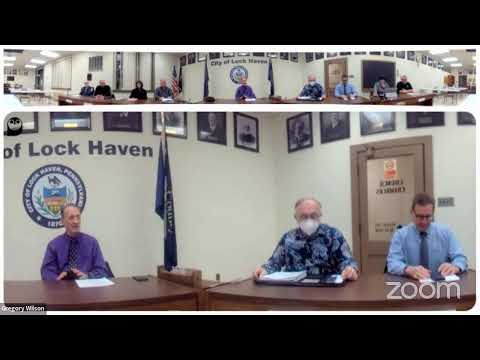
Lock Haven council adopts resolution urging reconsideration of state‑related university tax exemption
Summary
Council voted to adopt Resolution 2022‑18 urging state legislators to consider changes that would allow host communities greater compensation from state‑related universities; the resolution drew a split debate over fairness, legal constraints and potential effects on tuition.
Lock Haven City Council voted to adopt Resolution 2022‑18, which would be forwarded to state legislators and the Pennsylvania Municipal League requesting consideration of approaches that address the fiscal burden borne by host communities for state‑related universities.
Staff framed the resolution as a response to House Bill 2475 (as presented to council), noting that a portion of local property tax bills can effectively subsidize tax‑exempt university property and that some host communities face higher median property tax bills as a result. The resolution would encourage state‑level discussion of a consistent pilot or other measures to reduce the municipal tax burden tied to university exemptions.
Council debate was robust and split. One council member (speaker 7) argued the bill is "wrong on its face" and legally problematic, saying state‑related universities are treated as instrumentalities of the Commonwealth and would be difficult or impossible to tax. He also warned that imposing such taxes could increase tuition. In contrast, another council member (speaker 6) urged support, saying host communities are underfunded and should press for in‑lieu payments or other compensation mechanisms; he framed adoption as backing the municipal league and other university towns working on the issue.
The council passed the resolution by voice vote with a majority in favor; the clerk will forward the adopted resolution to the municipal league and listed legislators per staff instructions.
Why it matters: Council members on both sides said the question touches on legal limits, fairness for property owners and the trade‑offs between local revenue and higher education affordability. The resolution does not change state law; it is a policy advocacy measure to be delivered to state policymakers and the municipal league for possible coalition action.
Next steps: The adopted resolution will be mailed to the listed members of the Pennsylvania House leadership and the finance committee and shared with the municipal league for consideration among the 14 host communities mentioned in staff materials.