Get Full Government Meeting Transcripts, Videos, & Alerts Forever!
Get email alerts on the Mental Health topic
No spam. Unsubscribe anytime.
Mono County behavioral health director outlines Care Court readiness, cautions limited caseload and funding gaps
Summary
Behavioral Health Director Robin Roberts briefed the Mono County Board of Supervisors on California's Care Court (Care Act), describing eligibility, petition processes and the county's coordinating role; she said the county expects few complete Care Court cases but hopes the process will engage people otherwise disconnected from services. Funding shortfalls for rural counties were a major concern.
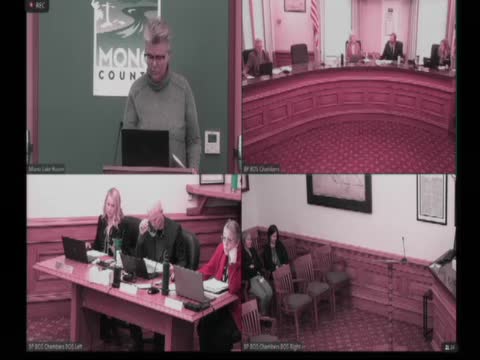
Robin Roberts, Mono County behavioral health director, told the Board of Supervisors that Care Court is a new civil-court pathway intended to connect Californians with schizophrenia-spectrum or other psychotic disorders to treatment and support services.
Roberts summarized how the process works: a petition can be filed by many parties, the superior court evaluates eligibility and, if appropriate, refers the person to county behavioral health for investigation and care planning. She emphasized that ‘‘homelessness itself is not a reason’’ for a Care Court petition and that Care Court does not automatically authorize forced long-term medication; rather, it creates additional entry routes into coordinated treatment and supports.
Why it matters: Roberts said early treatment in psychosis can dramatically improve outcomes, but many people in rural areas delay care until the illness becomes severe. Care Court is intended to widen doors to services, she said, even though Mono County expects its caseload to be small.
Board members pressed Roberts on two practical concerns: whether courts can order participation (Roberts: courts can order participation in Care Court but Care Court does not itself allow courts to compel medication) and who will pay for services. Roberts said county behavioral health will be required to serve people regardless of insurance under Care Court and that reimbursement rates for private insurers are often far below the cost of intensive services. Several supervisors called continued state funding for rural counties ‘‘essential’’ and urged staff to keep advocating for full state support.
Roberts also described the clinical realities: many people with psychotic disorders experience anosognosia (a lack of awareness of illness), meaning that building trust and long-term relationships is often needed before someone is willing to accept medication or other interventions. She highlighted trade-offs and ethical considerations about attempting to increase treatment uptake without broadly changing conservatorship law.
Next steps: County staff said they will continue preparing operational plans, coordinating with the court, public guardian and public defender offices, and tracking Care Court guidance from the state and the Department of Health Care Services (DHCS). The board offered no formal vote on program adoption but signaled support for continued readiness work and for seeking clarity on funding mechanisms.