Get Full Government Meeting Transcripts, Videos, & Alerts Forever!
Get email alerts on the Housing Element topic
No spam. Unsubscribe anytime.
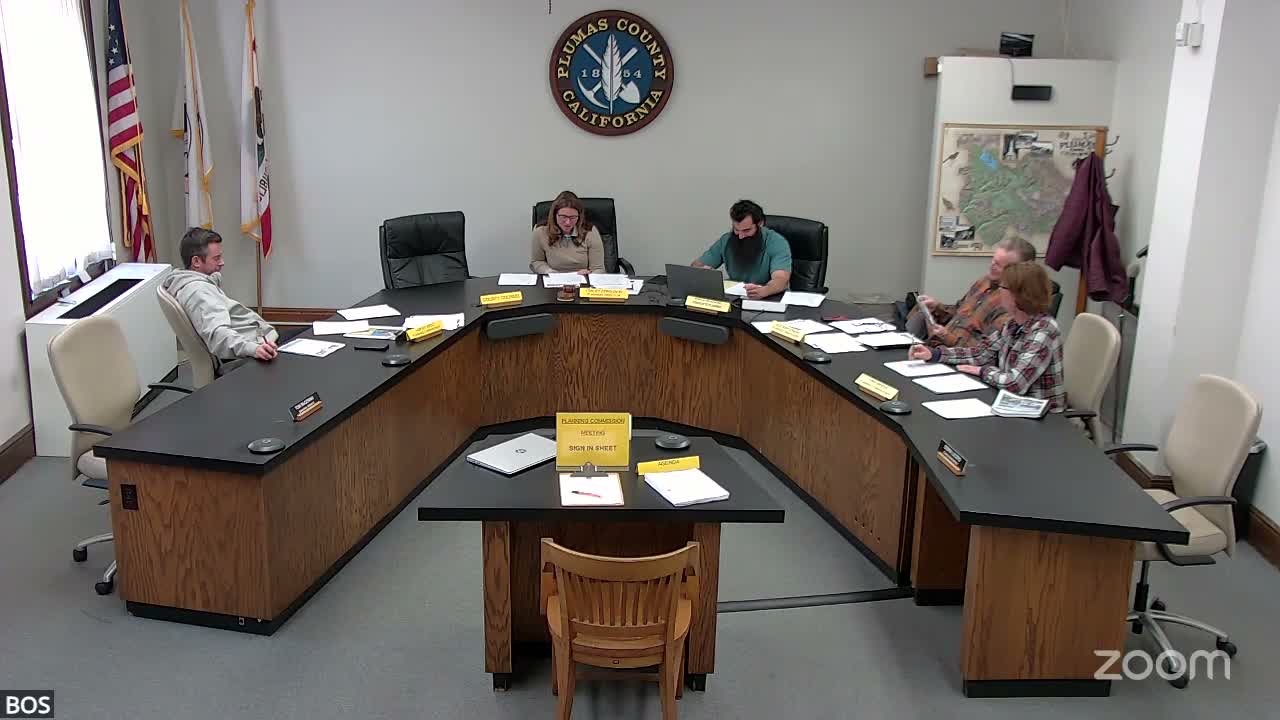
Plumas planning staff sets housing element schedule, warns of state review risks and need for public input
Summary
Staff outlined steps for the seventh‑cycle housing element: a public review draft planned for late February, a March workshop and an April initial submittal to HCD; staff warned noncompliance risks may affect state funding eligibility but said no material impacts to awarded grants were reported so far.
Planning staff told the commission that the Plumas County seventh‑cycle housing element update is moving through an expedited schedule and will require public engagement, technical assistance and close coordination with the California Department of Housing and Community Development (HCD).
Staff said a public review draft was targeted for Feb. 28 (described in the packet as an "80% draft"), with a housing element workshop for the planning commission tentatively set for March 20 during the 30‑day public comment period. The county aims to submit an initial draft to HCD in April for the 90‑day completeness review, with final certification anticipated later in the year. Staff described the Housing Element ‘‘completeness checklist’’ HCD uses and said the county must crosswalk element pages to government code requirements.
On the consequences of noncompliance, staff said they have not been notified of any material effect on grants to date, but warned that noncompliance can result in delays or loss of eligibility for some state funds. ‘‘Consequences of noncompliance will result in ineligibility or delay of receiving state funds,’’ planning staff said in response to a commissioner question.
Staff emphasized the need to finalize the vacant‑land inventory, Affirmatively Furthering Fair Housing (AFFH) annex material, and other gap items. They said the county will model elements from peer rural counties that have navigated HCD review and will bring technical assistance to the commission for workshops and targeted questions.
Why it matters: The housing element sets legal and programmatic requirements for accommodating the county’s Regional Housing Needs Allocation and is tied to future state funding eligibility. The commission was asked to help with public outreach and to flag local data that could fill gaps in the draft.
What’s next: Staff will circulate the public review draft, hold at least one commission workshop during the public comment period, and work with HCD through the state review and revision cycles.