Citizen Portal
Sign In

Lifetime Citizen Portal Access — AI Briefings, Alerts & Unlimited Follows

Rockville staff to pursue MPDU code rewrite after inclusionary zoning study; council seeks more data

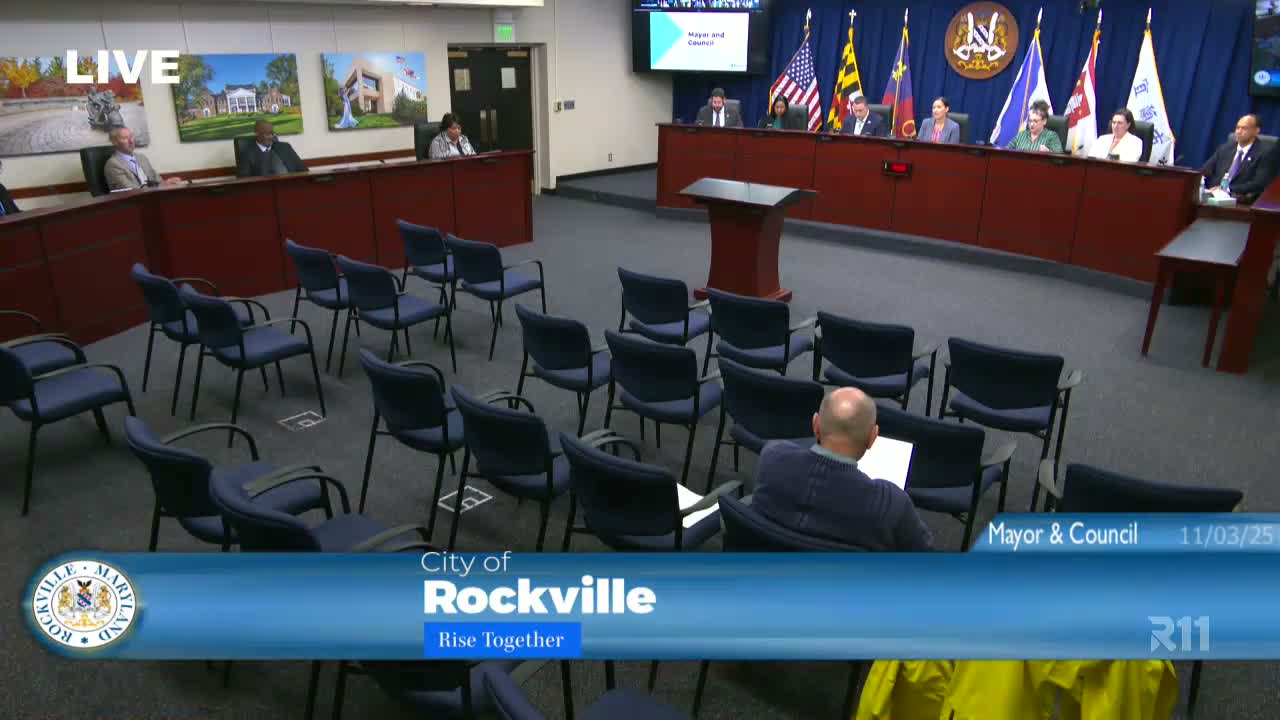
Rockville Mayor and Council · November 3, 2025

Loading...

AI-Generated Content: All content on this page was generated by AI to highlight key points from the meeting. For complete details and context, we recommend watching the full video. so we can fix them.

Summary

City staff presented research showing steep housing cost burdens and uneven MPDU production; council agreed to continue an inclusionary zoning program, requested deeper data from the upcoming housing needs assessment, and asked staff to consider targeted incentives, flexible in-lieu options, and ways to reach lower-income households.

Jane Lyons Raider, Housing Programs Manager, and graduate researcher Colin Maloney presented initial research and policy options for the city's Moderately Priced Dwelling Unit (MPDU) program (City Code chapter 13.5). Their presentation framed MPDUs as the primary local tool for producing affordable housing and summarized national evidence about trade-offs in inclusionary zoning (IZ) design.

Colin Maloney summarized the city's housing-gap analysis and MPDU production history. He said, "nearly half of renters and a quarter of all homeowners in the city of Rockville are cost burdened," meaning those households spend 30% or more of income on housing. Maloney reviewed key IZ design features: a 15% MPDU set-aside, a 20-unit project threshold in Rockville, a 99-year rental affordability control, and 30-year affordability for for-sale MPDUs. He also noted production is uneven year-to-year and often market-driven; since 1990 the MPDU program produced roughly 1,500 units in total, averaging about 60 per year but with major fluctuations.

Staff framed next steps for a wholesale MPDU code rewrite in spring 2026 and listed the mayor-and-council feedback requested: 1) whether to continue an inclusionary program (staff recommended yes); 2) explore policies that lessen cost burdens on market-rate consumers while incentivizing development (density bonuses, fee waivers, expedited permitting); 3) consider more flexible payment-in-lieu options while prioritizing the construction of income-restricted units; and 4) explore ways to target lower incomes and improve program reliability.

Council members broadly supported continuing an IZ program but emphasized the need for deeper data before code changes. Doctor Miles and others suggested hiring or ensuring the forthcoming housing needs assessment includes the MPDU-specific analyses (developer impacts, land-value effects, vacancy and pipeline data, and racial/economic outcomes). Council members raised implementation concerns: how AMI bands are set and negotiated, the practice of on-site selection by developers or corporate landlords, the availability of larger family units, waitlist procedures for rental MPDUs, and how MPDU incentives might be calibrated so production is not discouraged.

City staff said the city will execute a housing needs assessment and expects the forthcoming consultant work to provide much of the needed analysis; council members nevertheless suggested the option of a narrower consultant focused on IZ if gaps remain. Staff committed to returning with specific code proposals after the research and continued stakeholder engagement.

No ordinance amendments were adopted at the meeting; the council directed staff to continue research and community engagement ahead of the MPDU code rewrite.