Get Full Government Meeting Transcripts, Videos, & Alerts Forever!
Get email alerts on the Seniors And Social Isolation topic
No spam. Unsubscribe anytime.
Hillsboro Civic Leadership Academy urges city steps to reduce senior isolation
Summary
Local Civic Leadership Academy students presented research and recommendations to Hillsboro City Council on Nov. 5, 2024, urging clearer resource navigation, transit improvements, peer tech training, and intergenerational programs to reduce loneliness among older adults.
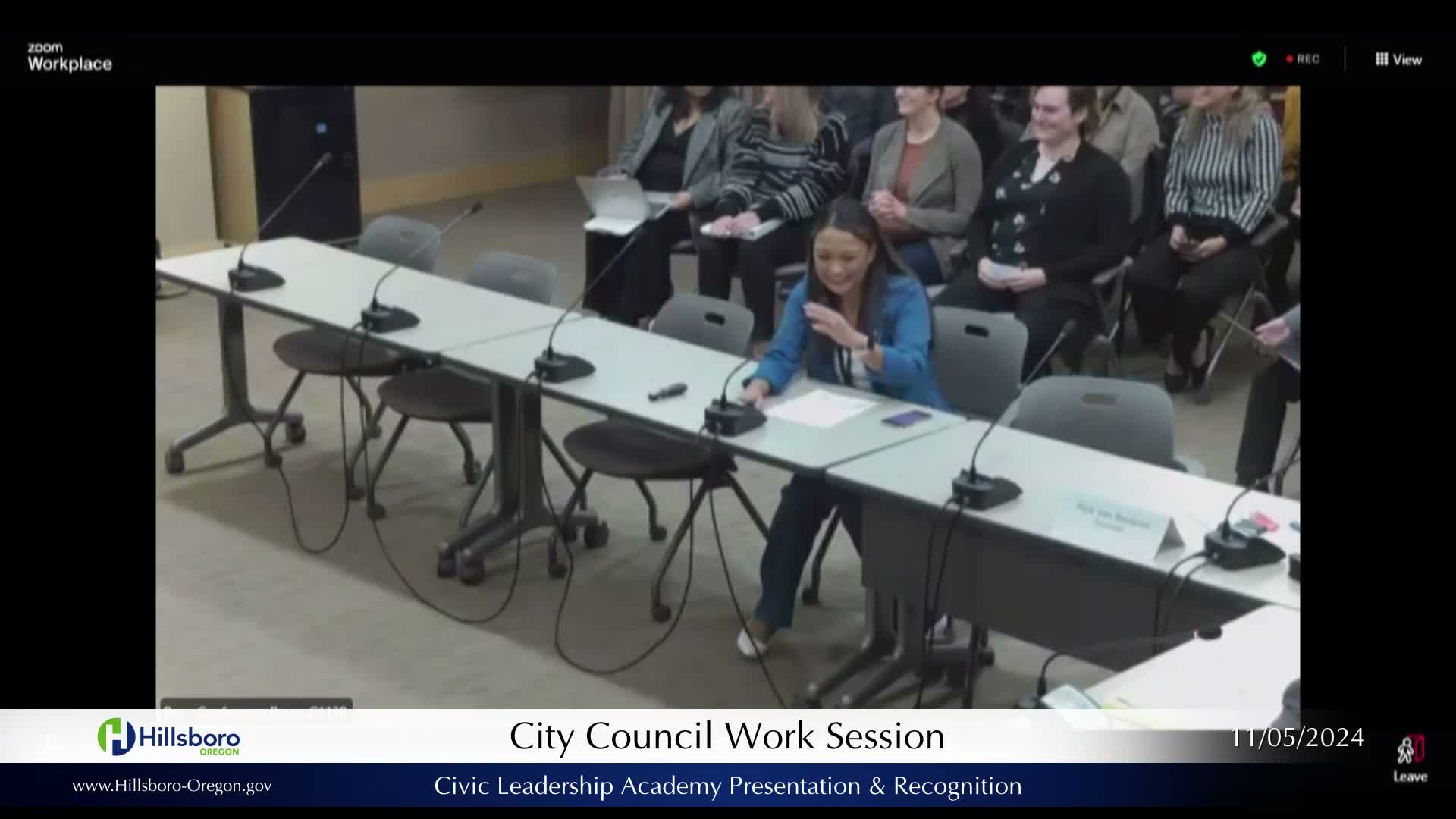
Mikayla Hennetti, city management program coordinator in the city manager’s office, introduced the 2024 Hillsboro Civic Leadership Academy on Nov. 5 and said the cohort focused on one question: "how can the city assist aging community members who often experience feelings of isolation and loneliness to feel more included and visible." The six-week academy partnered with Portland State University and local agencies to research barriers and propose city-led responses.
The student presenters laid out four main challenge areas: information and resource visibility, transportation access, technology proficiency and safety, and other social or health-related contributors such as hearing loss and addiction support. Joanna Pabasteran, a student presenter, said many older residents are unaware of existing services and proposed a dedicated, easy-to-find seniors section on the City website, regular promotion in local media and a user-friendly printed and online directory organized by need.
On transit, Erin Lewin summarized accessibility problems around newer developments and major corridors. She noted limited service on routes serving key community sites, long wait times for medical transportation, and that some older residents live on fixed incomes: "Cars cost money to own and maintain, and a lot of aging people live off of less than $1,300 a month," she said, arguing for workshops with businesses, improved stop amenities, and a volunteer 'buddy' service to help older riders use public transit.
Rita Snodgrass urged expanded peer-led technology training and greater attention to online safety. She cited FBI Internet Crime Complaint Center figures presented by the students: reported losses to elder fraud from January to May 2024 totaled about $1.6 billion, and 2023 losses were reported at roughly $3.4 billion. Students recommended expanding the city's senior tech pals program, recruiting high‑school volunteers for drop‑in tech help, and including safety training for volunteers.
Other student findings included that hearing loss affects roughly one in three older adults and is linked to social withdrawal and cognitive decline; only about 20% of older Americans with hearing loss use hearing aids, the group said, citing national statistics. The team also recommended improved local listings for addiction and behavioral‑health supports and older‑adult specific peer groups.
Council discussion emphasized outreach to older adults who are not connected to senior centers — suggestions included partnering with case managers and making printed materials and a phone contact highly visible in City publications. Several council members praised the academy model as an inexpensive way to surface community‑centered ideas and encouraged staff to consider the students' recommendations in ongoing planning and communication work.
The presentation concluded with a short graduation where each cohort member received a personalized street sign from the city. The council thanked participants and indicated staff follow-up where appropriate. No formal policy was adopted at the meeting; staff and council asked that the recommendations be considered as possible items for future work sessions and outreach campaigns.
Next steps: councilors and staff indicated interest in discussing specific proposals (a City website seniors gateway, expanded tech training, and transit outreach) with relevant departments and partners in coming months.