State Board hears pilot turnaround program credited with fast gains at two Memphis schools
Summary
Department and Cognia presenters told the State Board that a four‑year school turnaround pilot has produced measurable improvements at participating Memphis schools, including large drops in chronic absenteeism and gains in graduation and reading metrics.
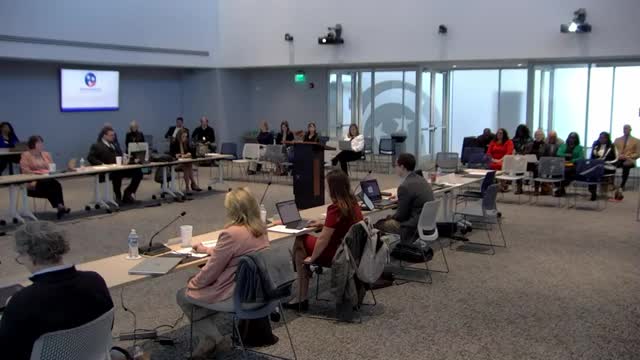
At a State Board of Education workshop in Staunton, the Department of Education and contracted turnaround partner Cognia described results from Tennessee’s four‑year School Turnaround Pilot Program and early gains at participating Memphis schools.
Robin Cupp, the department’s assistant commissioner for school turnaround, told board members the pilot—codified in state statute—allows five priority schools to partner with vetted turnaround experts and a locally appointed school turnaround committee to design and implement intensive plans. "It is a 4 year pilot program that gives 5 schools that are priority schools across the state the opportunity to partner with an outside turnaround vendor," Cupp said. The department created a model school turnaround plan with WestEd and required short‑cycle monitoring (every 30 days) so teams can quickly adjust strategies.
Cupp described the program’s pay‑for‑performance contract structure: turnaround vendors receive 50% of contract funds prorated as services are delivered and are eligible for the remaining 50% only if schools meet priority exit criteria. She also said the department will file annual reports to the General Assembly and a final comparative report by Oct. 1, 2025.
Connie Smith of Cognia and local leaders from Memphis Shelby County Schools presented school‑level outcomes. Claude Wilson, principal of Hawkins Mill Elementary, described dramatic reductions in chronic absenteeism and improvements in reading: "We were sitting at roughly 5.6 percent of our students who could actually read on grade level. Look into where we are now, 27.4 percent," Wilson said, also describing attendance efforts and incentive programs that helped drive gains. Cognia presenters said Hawkins Mill reduced chronic absenteeism by roughly 77 percent since the start of the pilot.
Eric Brent, principal at Trezevant High School, reported graduation‑rate improvements: "My graduation rate has went up to 79 percent," he said, contrasting earlier cohorts and listing partnerships (career pathways, faith‑based partners and industry ties) used to support student transitions to work or postsecondary study.
Board members asked how the pilot addresses student needs beyond classroom instruction. Cupp and Cognia said those supports are part of the implementation grants and provided through district partnerships and local community organizations. They emphasized the pilot’s diagnostic reviews, data‑driven action plans and coaching for school leaders as central to sustained change.
The department plans to continue comparing pilot schools’ outcomes with non‑pilot priority schools and to submit a final evaluation next year that will recommend whether elements of the model should be expanded statewide.