Get Full Government Meeting Transcripts, Videos, & Alerts Forever!
Get email alerts on the Behavioral Health Payment Coordination topic
No spam. Unsubscribe anytime.
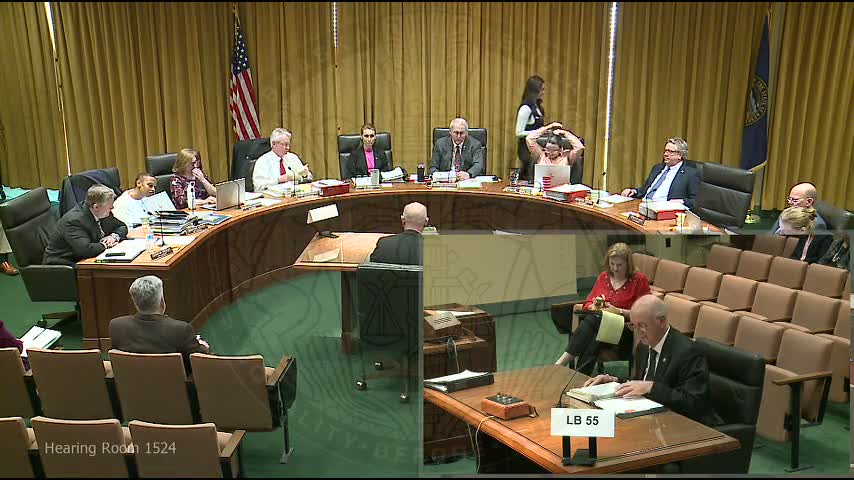
Nebraska bill LB 55 would bridge Medicare–Medicaid payment gap for some behavioral health providers
Summary
LB 55 would use targeted state funds (proposed $1.5M) to cover the difference between Medicare and Medicaid reimbursement for dual‑eligible behavioral health clients after a Medicare credentialing change halved payments to certain providers, witnesses told the Appropriations Committee.
A change in Medicare credentialing has created a payment coordination issue that Nebraska behavioral‑health providers say is forcing them to choose between serving low‑income, dual‑eligible clients and taking a substantial financial loss. LB 55 would appropriate $1.5 million from the hospital quality assurance and access assessment fund (or other available sources) to restore prior Medicaid‑level payment for those dual‑eligible clients.
Senator Myron Dorn introduced LB 55, explaining that in 2024 Medicare began credentialing licensed independent mental health practitioners and marriage/family therapists as Medicare providers; when Medicare is primary the Medicare rate is substantially lower than Nebraska’s prior Medicaid payment. Several nonprofit behavioral‑health agencies testified this change has halved reimbursement for the same services for dual‑eligible patients and, in practice, has led providers to place clients on wait lists or stop taking dual‑eligible clients (John Day of Blue Valley Behavioral Health, Chase Francl of Mid Plains Center and others, SEG 1554–1700).
Witnesses described a six‑month stay from DHHS that delayed impact, efforts to pursue a state plan amendment, and mixed guidance from CMS. Many providers reported projected revenue losses (estimates in testimony ranged from tens of thousands to several hundred thousand dollars per agency for the year) and urged a targeted solution. Proponents argued LB 55 would not expand Medicare coverage but would allow Medicaid to pay the balance up to the Medicaid maximum to keep providers whole for dual‑eligible visits.
DHHS opposed the bill in committee. Drew Goncharowsky, Medicaid director at DHHS, cautioned that reverting to the prior bypass approach or otherwise making Medicaid pay to the higher Medicaid rate for these services could create parity and coordination‑of‑benefits problems across provider types and expand fiscal exposure beyond the $1.5M estimate. DHHS said Nebraska’s policy generally treats Medicaid as payer of last resort, paying co‑payments or balances up to Medicare rates, and warned of broader precedent and cost implications if the change were applied to all behavioral‑health providers (SEG 2006–2056).
Committee members pursued technical questions about which populations the appropriation would help (dual‑eligible vs. Medicare‑only) and the CMS FAQ language that suggests states may pay balances up to Medicaid maximums; proponents and DHHS agreed to continue working on precise language and fiscal impacts. The hearing closed with proponents and DHHS remaining in negotiation over the bill’s scope and cost.
What happens next: The committee did not advance the bill at the hearing. Further negotiations were indicated between DHHS, providers and the bill sponsor to clarify scope and fiscal effects.