Get Full Government Meeting Transcripts, Videos, & Alerts Forever!
Get email alerts on the Developmental Disability Services topic
No spam. Unsubscribe anytime.
Providers, researchers urge 11% pay increase for direct support professionals in LB 54
Summary
LB 54 would raise reimbursement for direct support providers by 11% to narrow the wage gap with the Beatrice State Developmental Center; witnesses cited high turnover (≈50%), a ~19% worker shortage and potential federal matches if state funds are invested.
Nebraska providers, researchers and advocacy groups told the Appropriations Committee that LB 54 — an 11% rate increase for direct support professionals (DSPs) who serve people with intellectual and developmental disabilities — aims to improve hiring and reduce turnover that, they said, undermines quality and availability of home- and community‑based services.
Senator Myron Dorn introduced the bill and framed the ask as parity with Beatrice State Development Center wages; the fiscal estimate presented in testimony pegged state funds at roughly $25.3 million with an estimated $28 million in additional federal matching dollars (SEG 846–866). Ernie Goss, who presented a study for NASP, reported that Nebraska DSP wages are about 67% of a local living wage and that turnover rates hover around 50.2 percent, producing a calculated shortage near 19 percent of needed workers (SEG 898–931).
Provider representatives described how low reimbursement constrains hiring and forces agencies to rely on expensive temporary staff. Alana Schriver of the Nebraska Association of Service Providers said Nebraska competes locally for workers and noted that changes such as mandatory electronic visit verification can reduce paid visits if technology or GPS fails — a special concern for rural providers (SEG 1014–1109). Multiple agency leaders described operating deficits, rising insurance costs and dependence on temporary ARPA funds that are ending; several warned that without permanent rate adjustments the state’s plan to reduce the developmental‑disability waiver wait list will be hard to implement.
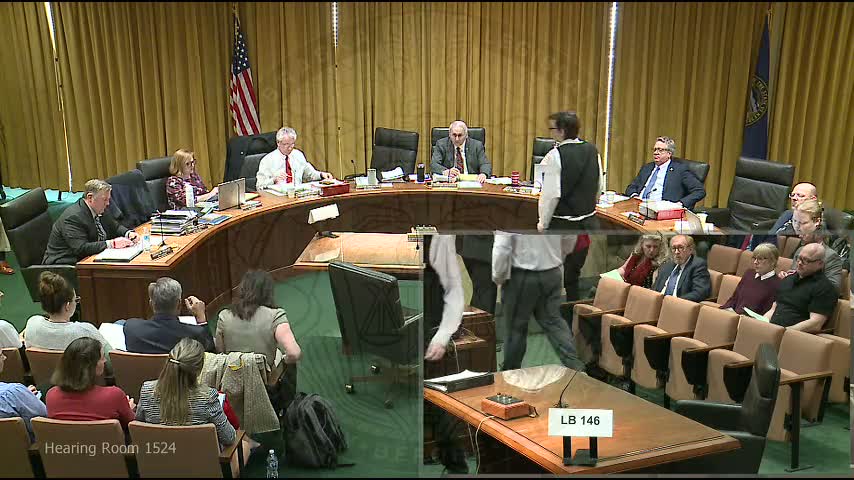
Witnesses urged the committee to consider a sustainable approach: tie rates to inflation or CPI, adopt regular rate adjustments, or otherwise shore up provider pay to ensure capacity to implement broader policy goals. The record shows 14 proponents and no opponents for LB 54 at the hearing; committee members thanked witnesses and closed testimony without a committee vote.
What happens next: LB 54 remains in committee for further deliberation and possible amendments during the budget process.