Lifetime Citizen Portal Access — AI Briefings, Alerts & Unlimited Follows
Planning Commission recommends City Council approve Village 7 plan amendments after public traffic and safety concerns
Loading...
Summary
The Planning Commission voted to recommend City Council approve amendments to the Village 7 specific plan and general development plan after extended public comment about traffic, emergency response and commercial reductions; commissioners asked staff and the developer to document responses to those concerns before council review.
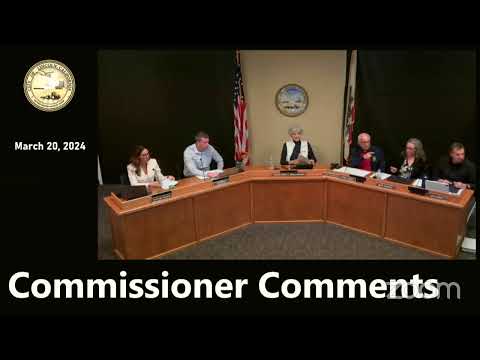
The City of Lincoln Planning Commission on March 20 recommended that the City Council approve amendments to the Village 7 Specific Plan and General Development Plan, following an extended staff presentation, public comment and debate.
Staff assistant planner Mikaela Noble and contract senior planner Kevin Valente presented a proposed addendum to the 2010 Village 7 EIR and a set of land-use changes covering roughly 700 acres in the Village 7 plan area. The amendments would shift acreage among land-use categories — decreasing high-density and mixed-use acreage while increasing low- and medium-density housing and open space — and consolidate park sites. Valente said the addendum concluded that the proposed changes would not introduce new significant environmental impacts under the California Environmental Quality Act.
Residents who live near the planned Village 7 area urged the commission to pause or delay action until infrastructure and safety issues are clarified. Neil Henson, a nearby resident, told commissioners he was concerned that ingress and egress had not been ‘‘fully vetted’’ and warned of limited evacuation routes and emergency access. Other speakers raised similar issues: traffic bottlenecks on Ferrari Ranch Road, the proximity of a proposed school to commercial uses, and the city’s current emergency medical staffing. Chris Fisher, who identified himself as having two decades in law enforcement, said he was ‘‘very disturbed’’ by the proposed high-density housing adjacent to a school and called on the city to evaluate public safety capacity.
Phil Rodriguez, representing the applicant (Lewis Planned Communities/Lewis Group of Companies), responded that the project’s traffic modeling and the original environmental documents informed roadway widths and planned improvements. Rodriguez pointed to the project’s development agreement and past environmental permits from the Army Corps of Engineers and state agencies as the basis for changes to open space and park locations. He also noted that the project participates in Community Facilities Districts (CFDs) that provide ongoing funding for public safety and maintenance tied to new development.
Commissioners debated whether to table the amendments to allow more time to review extensive redline edits to the plans. A motion to table to April failed on a roll call; Vice Chair Gilbert then moved to recommend approval, and the commission subsequently approved the recommended resolutions (votes recorded). Several commissioners said they supported the project overall but asked staff to provide the redline materials and a clear memorandum summarizing the removed text and the net policy changes prior to the City Council hearing.
What’s next: the Planning Commission’s recommendation will go to the City Council for final action. Staff and the applicant said they will provide additional documentation and responses to the traffic, school siting and public‑safety concerns raised by residents before council consideration.