Get Full Government Meeting Transcripts, Videos, & Alerts Forever!
Get email alerts on the Historic Preservation topic
No spam. Unsubscribe anytime.
Board and architects propose phased master plan for Mary Allen seminary site; city asked to consider task force and support
Summary
Board president Dr. Douglas and Austin architects presented a feasibility study and four preservation/redevelopment approaches for the 1886 Mary Allen seminary site, asked for community input and suggested the city form a task force to guide resources and grant-readiness.
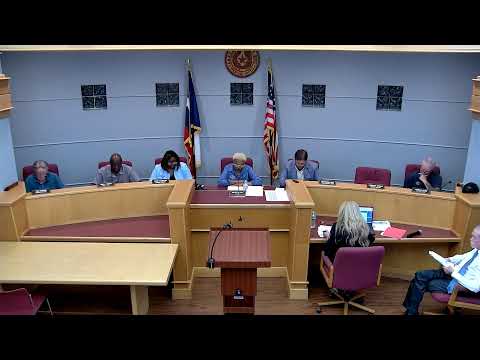
Dr. Douglas, president of the board for Mary Allen College and Museum, and Austin-based architects Tracy Hershman Henson and Chris Hudson presented a feasibility and master-plan overview for the Mary Allen seminary site during the Aug. 19 City Council meeting.
Presenters said the seminary was established in 1886 and the remaining administration building and site are historically significant but in poor physical condition. The architects described four broad approaches: full restoration (most expensive and program-dependent), stabilization and interpretive treatment of ruins, partial infill with modern construction for a new program, or demolition with curated interpretation and reuse of the site. They said the original building footprint was roughly 19,000 square feet (comparable in size to the Houston County courthouse) and emphasized the master plan will break work into manageable phases and strengthen future grant applications by providing a substantive feasibility report.
Dr. Douglas asked the city to help convene community stakeholders and to consider forming a Mary Allen Task Force to advise on city resources, grant strategy and potential public-private partnerships. Presenters distributed surveys for community input and said the firms already completed measured drawings, photographic documentation and an animation showing the historic form. Staff and council members expressed support but said the city needs to study the resource implications and suggested community or county involvement would be appropriate before forming a formal city-led task force.
Why it matters: the building and site represent local history and potential community programming; early feasibility work can make future grant funding more competitive by documenting conditions and program options.