Get Full Government Meeting Transcripts, Videos, & Alerts Forever!
Get email alerts on the Education Assessment topic
No spam. Unsubscribe anytime.
San Carlos reports strong midyear gains, 96.6% daily attendance and targeted literacy work
Summary
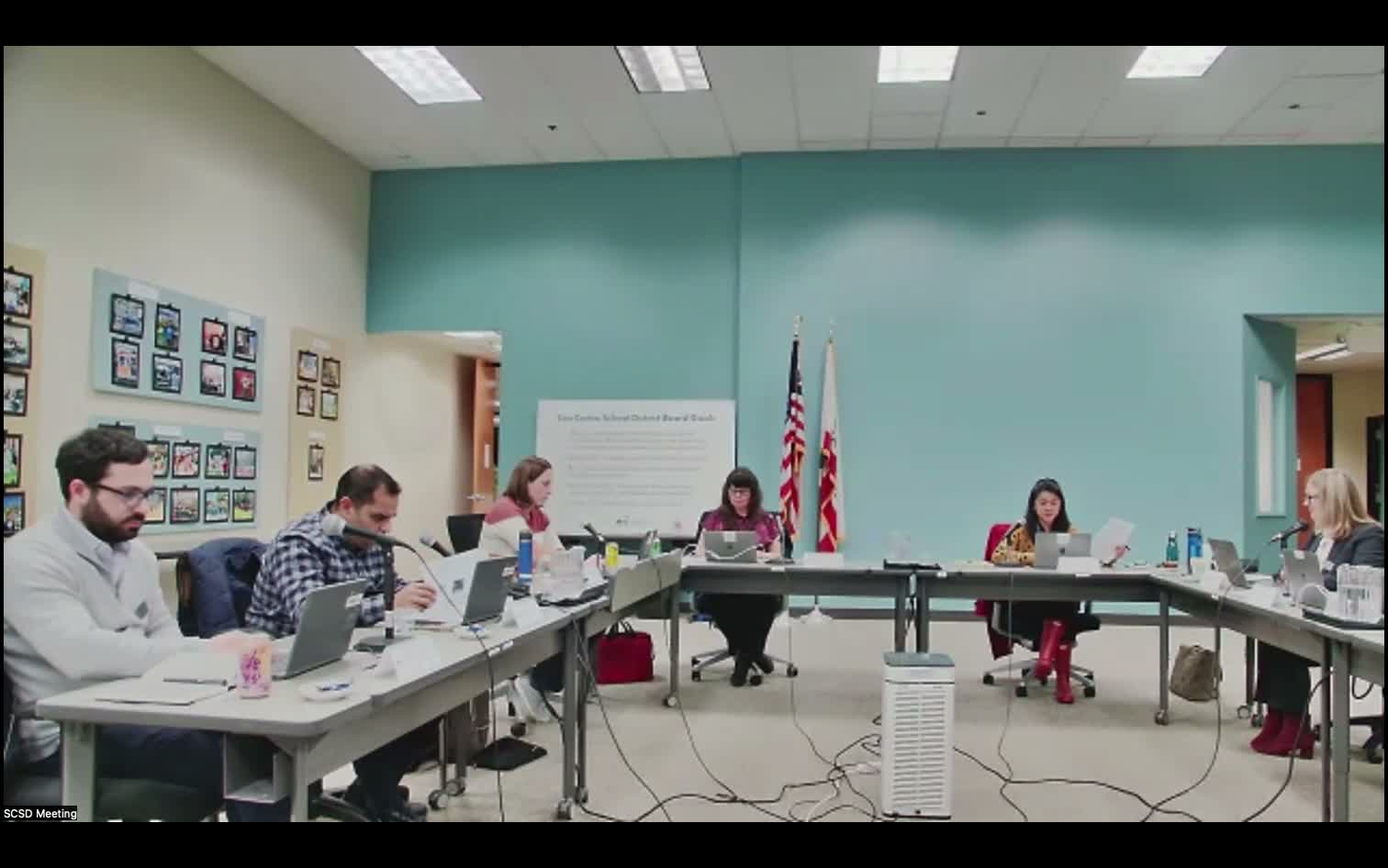
At its Feb. 6 meeting the San Carlos School District presented a midyear LCAP update showing measurable gains on state tests, an attendance rate of about 96.6% districtwide, and continued investment in tiered literacy interventions and professional learning.
Hans, the district presenter, told the San Carlos School District Board on Feb. 6 that the midyear Local Control and Accountability Plan (LCAP) update shows measurable academic gains and strong attendance. "96.6% of our students are attending on a daily basis," Hans said, highlighting a recovery to near pre‑pandemic attendance levels.
The presentation covered statewide test results in language arts, math and science, with Hans saying the district’s results exceeded growth in many neighboring districts. He described work with Sequoia Union High School District to track San Carlos students’ course enrollment and college‑readiness indicators, and said freshmen math retake rates are very low — about 1.5%–2% of students retaking algebra as sophomores, a signal of strong initial placement.
On reading, Hans summarized trimester benchmark assessments and the district’s tiered literacy intervention program that allocates extra support to students with greater needs. "We serve students in tier 2," he said, describing literacy associates and reading teachers who provide targeted interventions; staff said fuller disaggregated data will be shared at an upcoming study session.
Hans also described site strategies to address chronic absenteeism, including personal outreach such as postcards and staff follow‑up when students return. He noted a community liaison position (funded by an anti‑bias state grant) that focuses on the district’s most vulnerable families.
Board members asked clarifying questions about interim assessments for grades 6–8; Hans said the district uses i‑Ready for those grades and will publish related numbers as part of the LCAP updates. The presentation concluded with a reminder that professional learning is measured both locally and through a formal metric tied to the LCAP’s state priorities, and that the district uses teacher feedback surveys after PD sessions to guide future training.
Next steps: staff will provide more detailed literacy and benchmark data at an upcoming study session and continue monthly progress updates as part of the LCAP reporting cycle.