Get Full Government Meeting Transcripts, Videos, & Alerts Forever!
Get email alerts on the Public Engagement topic
No spam. Unsubscribe anytime.
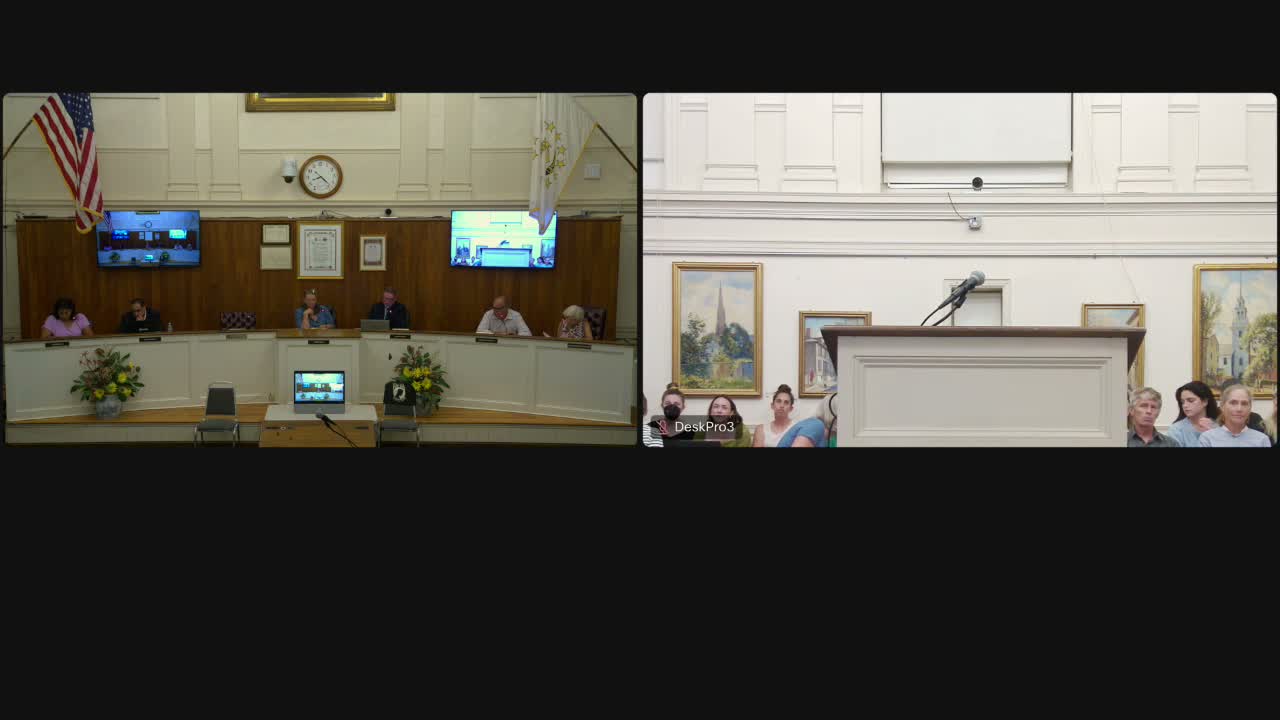
Newport council rejects resolution about Energy & Environment Commission forum after hours of public comment
Summary
Council considered and rejected a resolution that would have asked the administration to hold a city‑run hearing for opponents of offshore wind, following extended public testimony about whether an Energy & Environment Commission forum excluded dissenting voices.
The Newport City Council debated a resolution related to a summer educational series hosted by the city's Energy & Environment Commission (EEC) about climate change and offshore wind. Sponsor Councillor Carlin alleged some forum participants who opposed offshore wind had not been given adequate opportunity to speak and proposed revised language asking the city administration to arrange a public hearing to ensure opponents have a forum.
The original resolution criticized the commission for a perceived lack of balance; the sponsor offered an oral amendment removing accusatory language and reframing the request as an administrative hearing to ensure fairness and respectful public discourse. The amended resolution drew significant public comment both supporting and opposing the EEC and its panels: members of the public and experts argued both that the series had been inclusive and well‑run and that some groups were not given adequate access or were later marginalized.
After lengthy discussion and a roll call of councilors, the council first rejected the oral amendment and then rejected the original resolution in full by recorded vote. Several councilors praised the volunteer commissioners and said they saw no evidence of illegal censorship while also acknowledging community frustration and suggesting more opportunities for public engagement in future forums.
Public comment included statements from EEC vice chair Emily Conklin and chair Avi Robertson (who described the series and outreach), scientists and local residents alleging viewpoint discrimination, and other residents who said the series was balanced and educational.
What happens next: the EEC remains in place; councilors called for better communication and the option to arrange additional hearings if residents feel unheard, but the council declined to adopt a resolution that would single out the commission for rebuke.