Get Full Government Meeting Transcripts, Videos, & Alerts Forever!
Get email alerts on the Tourism Improvement District topic
No spam. Unsubscribe anytime.
Newport Council tables state-enabled tourism improvement district after debate on city share and board conflicts
Summary
After a public hearing and extended council debate, the Newport City Council voted to table a proposal to convert the city's existing tourism management arrangement into a state-authorized Tourism Improvement District (TID). Concerns centered on the city's 3% administrative share and council involvement on the TID board.
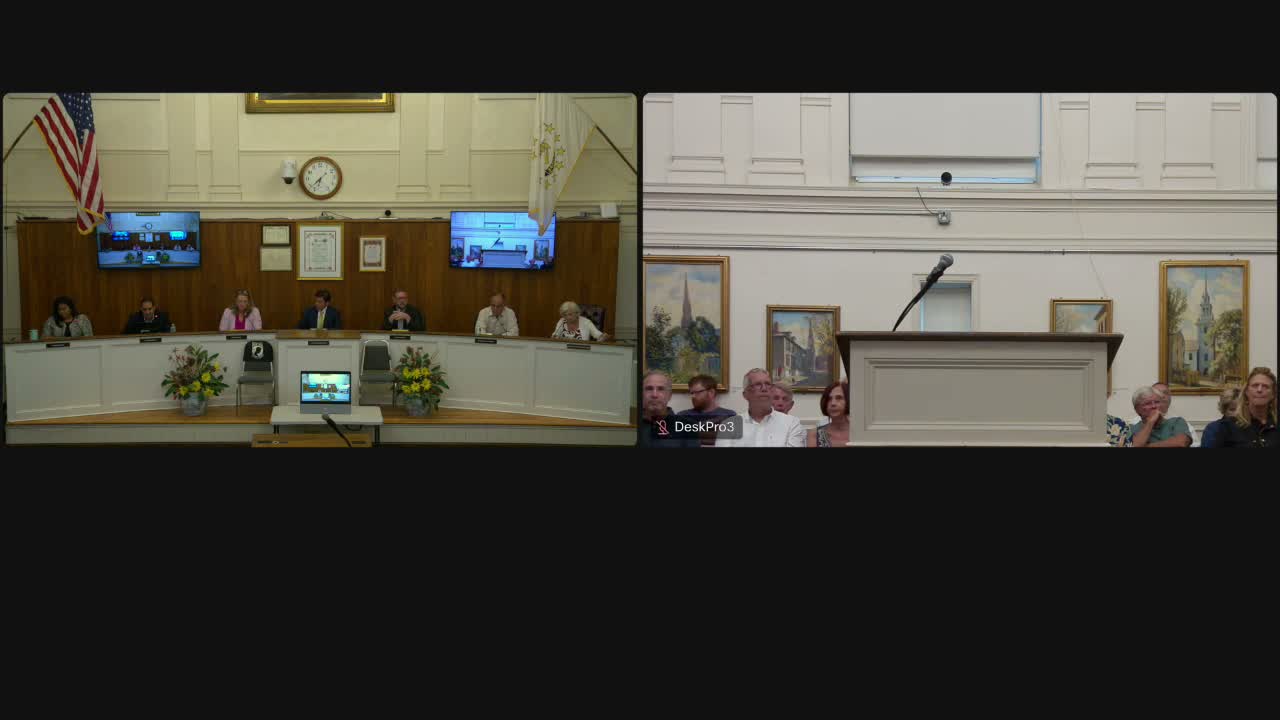
The Newport City Council on the night of the meeting opened a public hearing on a state-authorized Tourism Improvement District proposed for the city but ultimately tabled the item for further work and negotiation.
Councilors and members of the public spent more than an hour examining how the new statute differs from the city’s six-year tourism management district. Staff and the solicitor explained the proposal would leave Discover Newport holding funds in a separate account while a district board decides spending, and that the municipality’s role is limited under the enabling statute 45.5918 to reducing proposed assessments, adjusting boundaries, or excluding classes of businesses but not to increasing the city’s administrative percentage.
Discover Newport and several hoteliers defended the plan and the 3% administrative fee, arguing it pays for off-season marketing and minor administrative effort. Allison Atkins of Discover Newport said the flat-fee approach was chosen because businesses opposed a percentage-based assessment tied to room rates, and she called 3% a 'very reasonable processing fee.' Cheryl Twiss, director of sales at the Chandler at Cliff Walk, told the council the district helps small hotels and restaurants during slow months and urged approval.
Opponents and some councilors pushed back on two fronts: (1) whether the city should accept only a 3% administrative share (estimated at $16,000), and (2) whether serving city council members should sit on the district board, which raised conflict-of-interest concerns. One councilor summarized the technical limitation from state law: 'You can address the assessments, but the only thing you can do is reduce them.' The solicitor reiterated that significant adjustments would require a continuance and a revised plan returned by Discover Newport.
Following public comment and substantive council questions about collection, enforcement and the potential for district funds to be used for board member travel, a motion to table the item passed. The tabling preserves the council’s authority to request a reworked plan from Discover Newport that could address municipal compensation, explicit prohibitions on travel and board composition before the council considers final approval.
Next steps: the council asked staff and Discover Newport to return with clarified language or a revised petition and directed council members to consult with constituents and administration during the continuance. The item was tabled for further consideration and will return to the council at a future meeting for another hearing and vote.