Summit County staff outlines bills to watch as Utah's legislative session begins
Loading...
Summary
County staff told the Summit County Council the legislative session that began Jan. 17 has produced bills the county is actively tracking, including changes to moderate‑income housing rules, elections legislation on ranked‑choice voting and audits, and proposals to reallocate transit and gas tax revenue.
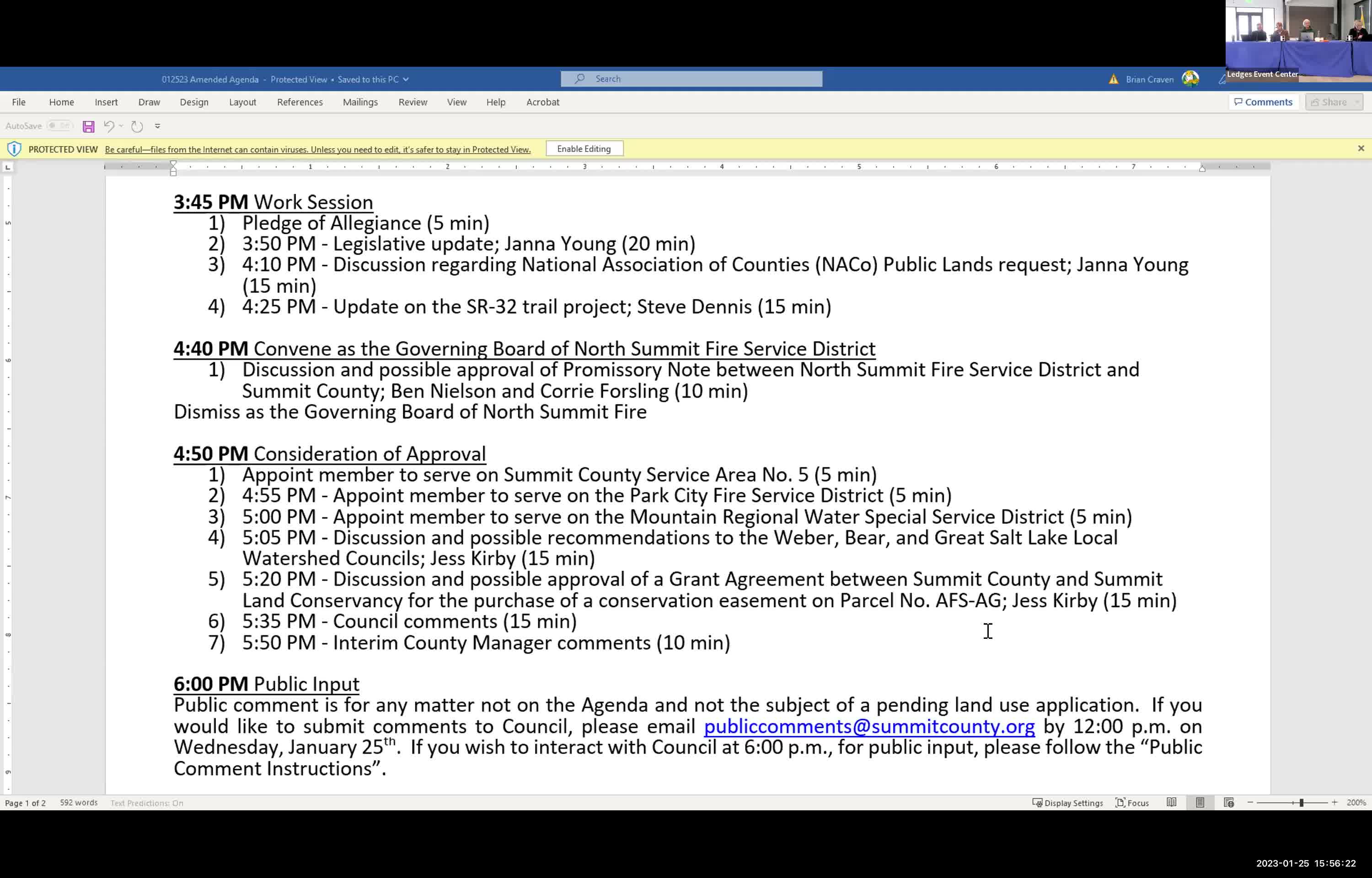
County staff on Jan. 25 gave the Summit County Council an initial briefing on the 2023 legislative session, saying the county has organized a weekly working rhythm with elected officials, staff, and the Utah Association of Counties to review bills and coordinate positions.
Staff member Jenna said the session began Jan. 17 and described the county's internal process: weekly working‑group meetings, steering policy committee meetings with UAC, Wednesday council updates and Thursday UAC coordination. She flagged a range of items the county is monitoring, including proposals from a state Economic Opportunity Commission to modify how moderate‑income housing plans are reviewed. "We're monitoring" she said, noting some proposals would shift steps now handled by legislative bodies to administrative processes in order to speed approvals.
Elections legislation drew council attention. A staffer noted a municipal ranked‑choice pilot exists that municipalities can opt into, but said one bill would eliminate that pilot; "let the pilot program run its course," the staffer said. Council staff also flagged bills that would address races without a majority winner, including a possible runoff, and a proposed measure to make ongoing legislative audits of elections routine. That audit bill contains a contested provision that would permit unsealing ballots after certification, which staff and council members said could undermine finality in elections. "Once an election has been certified I think it's very important that we not go back and revisit what the ballots actually said," staff said.
On infrastructure funding, staff described a proposal to split a 0.1 percent sales tax for transit into county and city shares; Summit County currently is grandfathered and would not lose its existing funding if that bill advances. Staff also said a separate bill would allocate part of growth in the gas tax to rural infrastructure projects, but that committee language has not yet defined "rural" or eligible projects.
Why it matters: these bills could alter county regulatory responsibilities, local revenues and timelines for development approvals. Staff said it will return to council with any bill language that directly affects Summit County and will seek direction when formal positions are requested.