Get Full Government Meeting Transcripts, Videos, & Alerts Forever!
Get email alerts on the Behavioral Health topic
No spam. Unsubscribe anytime.
Council weighs $300,000 to preserve school‑based behavioral‑health services; staff to seek contract options
Summary
County behavioral‑health leaders told the Summit County Council that a proposed $300,000 contribution is needed to maintain clinicians in all 17 local schools; council members urged staff to reconcile funds and explore contracting with Huntsman Mental Health Institute to improve billing and continuity.
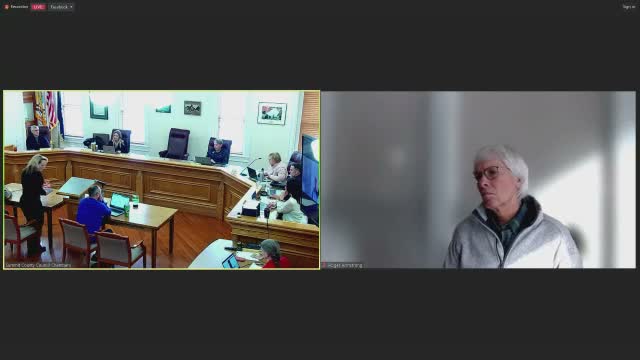
Behavioral‑health officials told the Summit County Council on Dec. 4 that cutting a proposed $300,000 from the budget would substantially reduce—or eliminate—school‑based treatment services that currently reach hundreds of students across Summit County schools.
Erin Newman and county staff explained the program covers therapy and clinical treatment provided inside schools. Council heard that last year roughly 581 students received services through school‑based clinicians, and that state allocations cover only a portion of program costs. Speakers said the county currently receives roughly $83,000 in state funding for the program but that the full operating cost is materially higher (rough figures discussed in the meeting ranged from about $566,000 to $650,000 annually). Without county support, clinicians placed in 17 schools would have diminished hours or could be removed, reducing access for students who otherwise lack services.
Officials described ongoing work with Huntsman Mental Health Institute and HealthyU to split or reassign contracts in a way that improves billing efficiency and allows vendors to draw down more of the available funding. Staff said assigning billing responsibility could reduce administrative steps and expand the range of billable services, but cautioned that any contractor change carries continuity risks and would require transition time.
Council members emphasized the program’s community impact and urged staff to explore contract structures and grant opportunities before finalizing cuts. The council did not take a final dollar vote at the meeting; staff were asked to reflect the behavioral‑health request in an updated budget spreadsheet and present reconciled options to the council on Wednesday.