Get Full Government Meeting Transcripts, Videos, & Alerts Forever!
Get email alerts on the Transportation topic
No spam. Unsubscribe anytime.
County unveils active‑transportation scorecard; staff say Kimball Junction, SR‑32 drive most crashes
Summary
Transportation staff presented a new active‑transportation scorecard and dashboard to show current walk/bike/transit metrics, highlighting safety hotspots at Kimball Junction and SR‑32 and proposing a follow‑up congestion management scorecard and federal grant exploration.
County transportation staff introduced an "active transportation scorecard" and online dashboard designed to show current conditions for walking, biking and transit across Summit County and help set targets for improvement.
The presenter said the county‑wide average active‑transportation score is roughly 24.7 but stressed that the average masks big variation: "in some areas in the Snyderville Basin, we get 100 out of a hundred; others we get 1, 2, 3 or 5," he said. He identified two corridors that account for much of the county’s bicycle and pedestrian crashes — Kimball Junction and SR‑32 — and said improvement efforts there would remove a large share of crash risk.
Staff explained the scorecard aggregates 11 performance metrics drawn from a mix of purchased data (walk and bike scores) and agency sources such as UDOT crash counts. The dashboard will present maps and metric definitions so the county can measure change over time and consider reallocating resources when results lag.
Federal grant prospects and priorities: council members asked whether the county has applied to the federal Safe Streets for All program. Staff said the county had not yet applied and expressed concern about competitiveness: the last round heavily favored other states and underserved communities, leaving little for similar Utah communities. "Based on the scoring and the criteria, we we don't have a lot of great confidence that we would get approved," staff said, but added they could pursue the next window if council wanted.
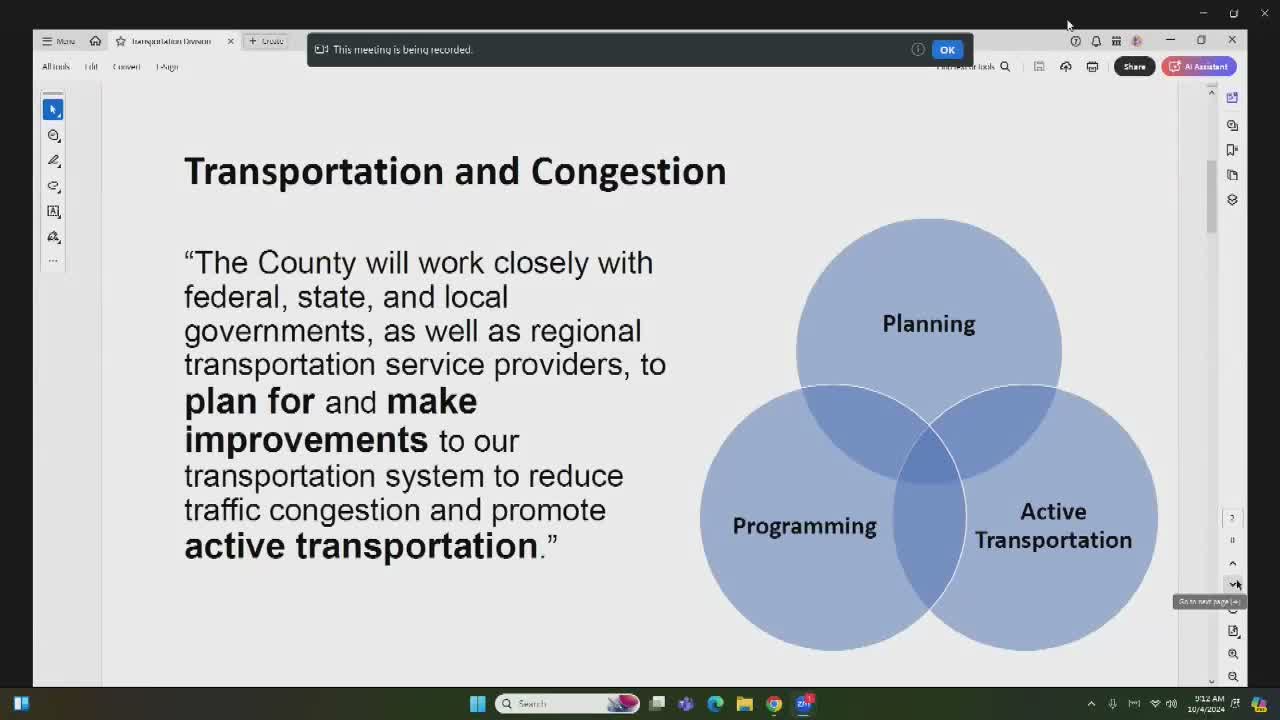
Next steps: staff recommended continuing development of the scorecard, rotating in a congestion management scorecard focused on reliability and vehicle‑trip reduction, and setting measurable targets and program resources to track progress. Councilmembers asked staff to use the dashboard to inform funding decisions and to return with recommended targets and prioritized countermeasures for the identified hotspots.
No formal decisions were made at the retreat; staff will bring follow‑up recommendations and targets for future meetings.