Get Full Government Meeting Transcripts, Videos, & Alerts Forever!
Get email alerts on the Historic Preservation topic
No spam. Unsubscribe anytime.
County survey finds 653 properties of potential historic interest and recommends intensive follow-up
Summary
A county-funded reconnaissance survey covered roughly 653 properties across several rural communities, recommended a phased intensive survey and proposed local recognition and rehabilitation incentives for threatened historic architecture.
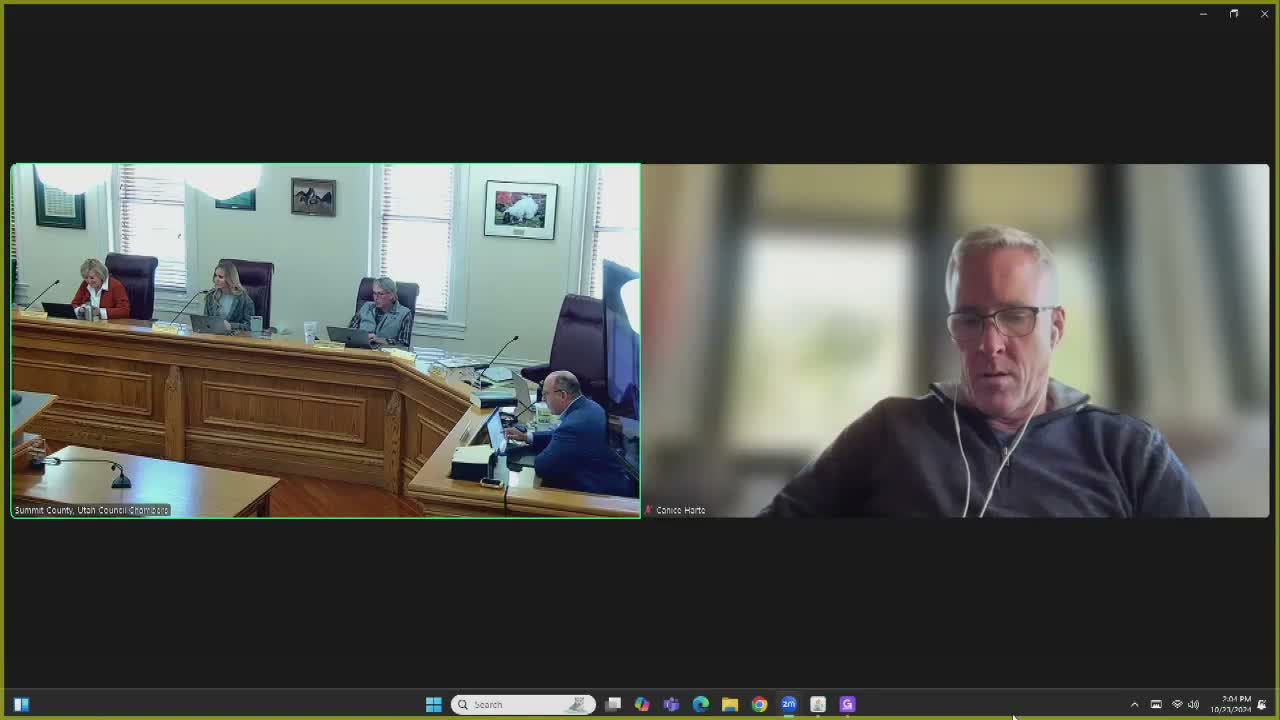
County-funded preservation consultants presented a countywide reconnaissance survey on Oct. 23 that documents historic architecture and recommends targeted follow-up work, including intensive-level surveys and incentives to preserve threatened buildings.
Kirk Huffaker of Huffaker Preservation Strategies and Joe Frazier summarized a multi-community review that originally aimed to survey "500 to 600 properties" and ultimately examined about "653," Huffaker said. The survey used a simple B/C/D/X rating system: B for buildings likely eligible for the National Register of Historic Places, C for altered older buildings, D for more recent structures, and X for demolished properties. Huffaker noted that about 8% of the surveyed resources were already gone since the county’s previous survey window.
The reconnaissance identified clusters of Victorian residential architecture, mid-century commercial and residential examples, farmsteads and vernacular agricultural buildings across notional areas including Hoytsville, Echo, Henifer and Boydsville. Huffaker recommended following reconnaissance work with intensive-level surveys for prioritized properties to support National Register nominations and to enable use of tax incentives such as the historic rehabilitation credit.
The presentation also urged using the county website and local partnerships (museum, Heritage and Landmarks Commission) to publicize findings and build recognition, and proposed policy tools—local designation, recognition programs and targeted incentives—to reduce demolition. "We put them in tiers," Huffaker said of recommended properties for deeper study, "just to sort of break it down, maybe make it more manageable." The consultant flagged the Hoytsville mansion as a high-value resource meriting county attention.
Council members asked about how many buildings constitute a district, how priorities were set and whether municipalities (Colville, Hennifer) might pursue their own surveys and grant funding. The presenters said some municipalities were lower priority in the current grant-funded work but could pursue separate efforts and that the county’s report was intended to inform planning and grant applications.
Next steps: council and staff will consider the consultant’s tiered recommendations and follow up on grant opportunities and potential intensive surveys in specific communities.