Get Full Government Meeting Transcripts, Videos, & Alerts Forever!
Get email alerts on the Development Project topic
No spam. Unsubscribe anytime.
Summit County Council approves amended Park City Junction development agreement tied to UDOT traffic milestones
Summary
Summit County commissioners voted to adopt Ordinance No. 987, approving an amended and restated development agreement for the Park City Junction project that ties housing construction to UDOT milestones and secures county-owned affordable units, transit improvements and civic amenities.
Summit County officials voted to approve an amended development agreement for Park City Junction on a majority vote, adopting Ordinance No. 987 and tying building permits and additional housing to specific Utah Department of Transportation (UDOT) design and construction milestones.
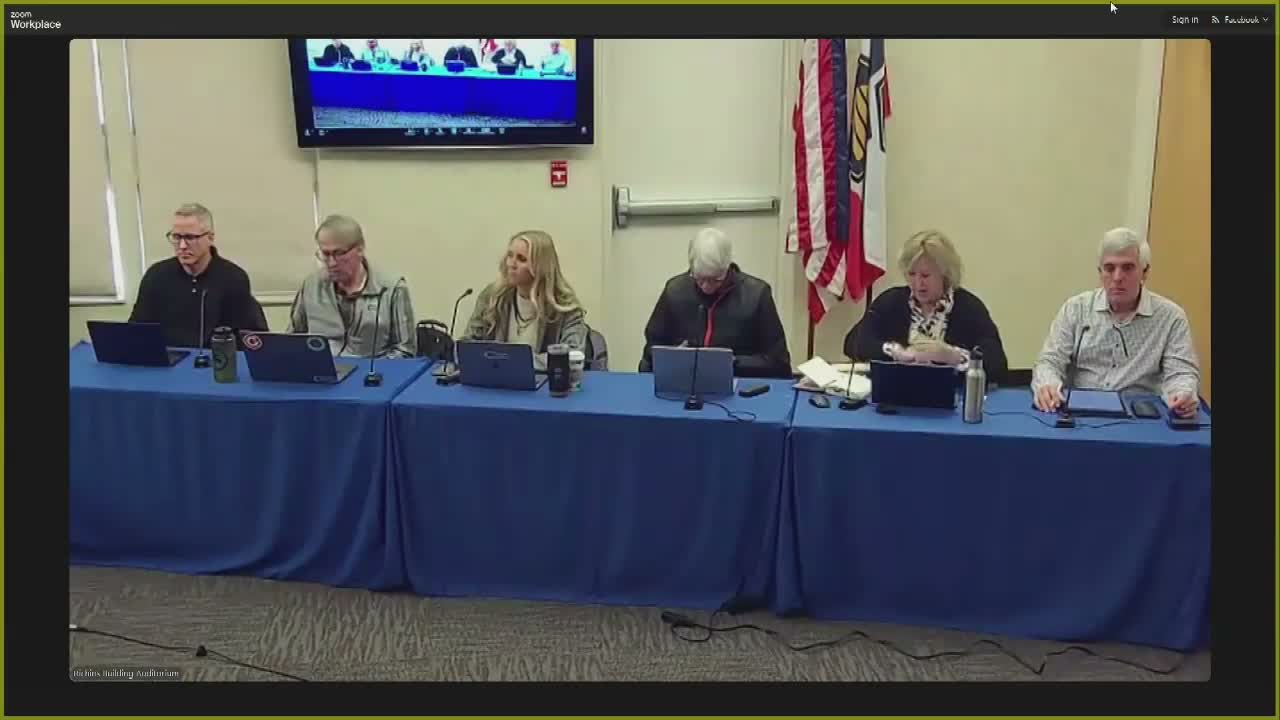
The council’s motion, made and seconded during the Jan. 17 meeting, followed hours of staff presentations and council debate over traffic mitigation, density and the package of public benefits the county secured from developer Dakota Pacific. The agreement phases development in tranches linked to UDOT actions — including placement on the short-term STIP list, 30% and 100% design completions and commencement of UDOT construction — so that later residential tranches cannot proceed until traffic fixes advance.
"If UDOT doesn't perform, the buildings don't go forward," staff member Dave Thomas said during the meeting, describing the seven tranches and noting Tranche 3 is tied to issuance of a building permit for the project's parking structure and allows 50 residential units to proceed even if other milestones remain outstanding. Thomas also described a fallback for the planned senior care facility: if an operator cannot be secured after one year, the developer may build a minimum of 90 residential units on specified parcels after providing evidence of its efforts to the county.
Councilor Chris, who led the discussion on the item, framed the approval as the product of a long planning process and of negotiations intended to extract community benefits in the face of state legislative pressure. "The legislature approved money to start the EIS," Chris said, noting that UDOT has narrowed potential solutions and that tying development to UDOT milestones is intended to press the agency to act on traffic improvements.
Several councilors said traffic at Kimball Junction is the central concern. "Traffic at Kimball Junction has been my concern from day one," Councilor Tanya said, urging reliance on UDOT technical expertise while stressing the need for patience and work with the agency. Tanya also said the county's share of amenities — including a library, transit center, amphitheater and 165 county-owned workforce housing units — should be funded without raising property taxes.
Councilor Roger opposed the agreement, citing density as a "fatal flaw" despite acknowledging community gains such as capture parking and civic spaces. Roger warned of legislative preemption and criticized the political pressure surrounding the decision: "Our power as a county comes from the legislature," he said. Roger said he would vote "no."
Supporters said the package substantially increases deed-restricted housing in the area. Councilor Candace described the current proposal as roughly 56.8% affordable housing (including the county portion) and argued negotiating the agreement would yield more community benefits than litigation or a state-imposed alternative.
The council moved to adopt Ordinance No. 987 to approve and adopt the amended and restated development agreement for Park City Junction (formerly Summit Research Park) with the staff-described changes. The roll call recorded multiple 'ayes' and at least one 'no'; the chair declared the motion passed.
After the county vote, the meeting's chair turned the floor over to David Geffen, identified as the vice chair of High Valley Transit, who convened that board. The High Valley Transit Board voted to consent to subjecting a portion of the Richlands parcel it owns to the amended development agreement.
Next steps: the development will proceed through the phasing triggers outlined in the agreement; UDOT design and construction milestones will determine when subsequent residential tranches can apply for building permits. The council did not set an implementation or construction start date beyond the phasing benchmarks contained in the agreement.