Get Full Government Meeting Transcripts, Videos, & Alerts Forever!
Get email alerts on the Disaster Recovery topic
No spam. Unsubscribe anytime.
Residents press Lakeland leaders for faster flood relief as AECOM watershed study continues
Summary
Multiple residents told the commission their lakes remain two feet above expected levels and described unmet recovery needs after October storms; staff said the city has started an AECOM watershed study (estimated 4–6 months) and that pumps and monitoring can be activated when needed.
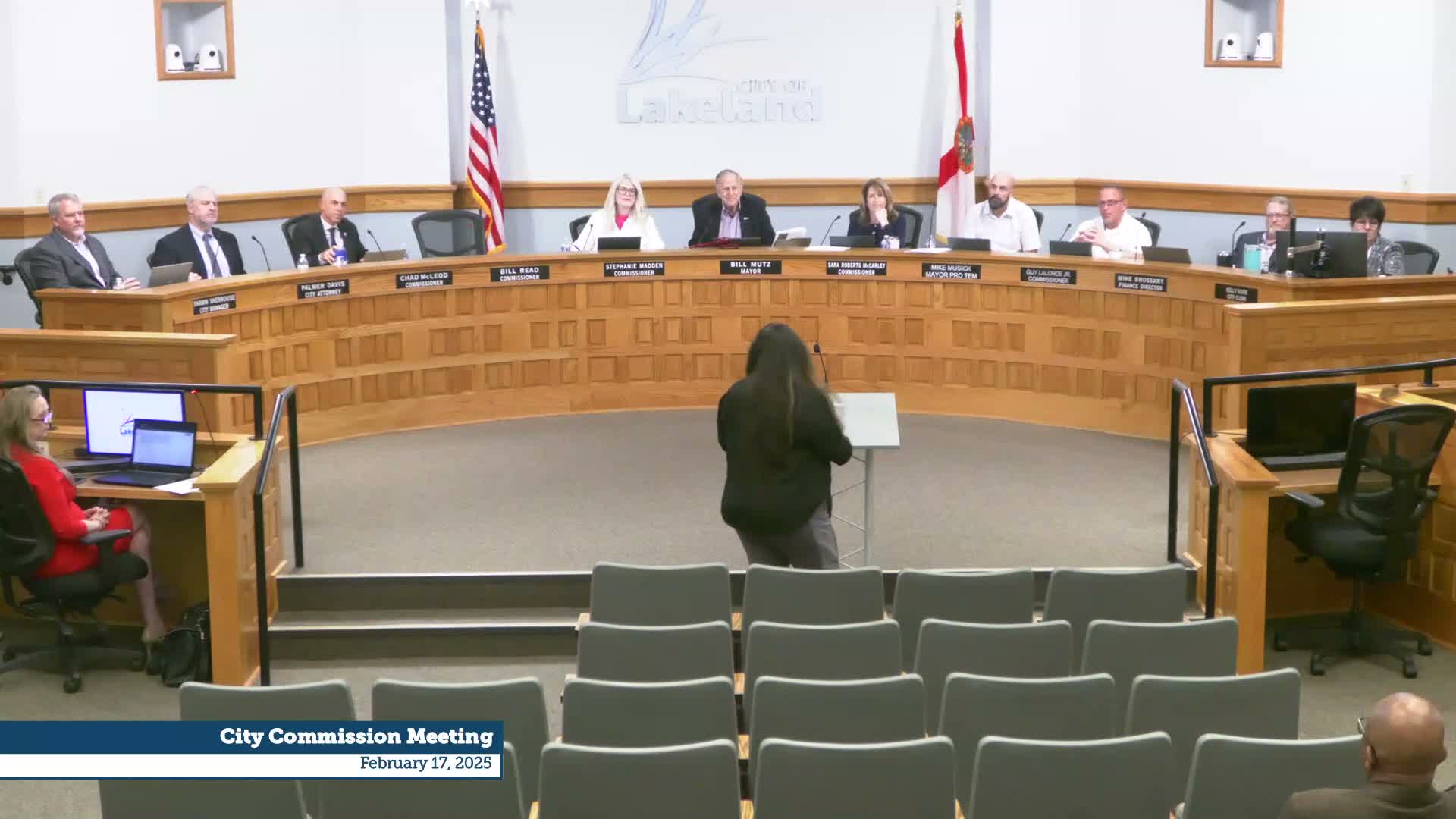
During the audience‑comment portion of the Feb. 17 meeting, multiple residents from neighborhoods around Little Lake Bonnie and other nearby lakes appealed to the City Commission for more rapid flood recovery and clearer communication about pump operations, flood‑level standards and assistance.
Nicole Aldo Honda Ramirez described ongoing damage to homes and foundations and said neighborhood lake levels remain two feet higher than they were before last October’s storms. "My lake is still 2 feet higher than it's supposed to be... Nobody's pumping," she told the commission, and she described neighbors who have been unable to rebuild and who received limited FEMA or philanthropic assistance.
Other speakers echoed complaints about permitting and pump activation. Several asked why the city had issued notice‑of‑compliance letters but not fines, and why some residents were receiving notices about yard maintenance while still recovering from storm damage.
City staff and commissioners responded in detail. The city manager and staff said the commission has contracted AECOM to perform an entire‑watershed study, coordinated with the Southwest Florida Water Management District (SWFWMD) and Polk County; staff estimated the study would take roughly four to six months but said SwiftMud/SWFWMD data is accelerating work. "That's actually short compared to normal studies like that," a staff member told the chamber.
Staff also said the city maintains an existing permit with the water‑management district and can activate pumps when lake levels exceed specified thresholds; staff reported daily monitoring during heavy‑rain seasons and weekly monitoring otherwise. Commissioners encouraged residents to submit photos and to use the city website’s listed assistance resources; staff also said code enforcement had sent notice‑of‑compliance letters but had not levied fines in the immediate aftermath of the storm.
Residents and some commissioners urged the city to expedite solutions and improve outreach: one asked for a staffed hotline for lake concerns and for clearer timelines for mitigation and funding. The commission said the study’s findings would inform any larger structural or permitting changes and acknowledged the short‑term urgency of the coming hurricane season.