
Boerne ISD budget advisory committee urges efficiencies, new revenue and advocacy push
Get AI-powered insights, summaries, and transcripts
Sign Up Free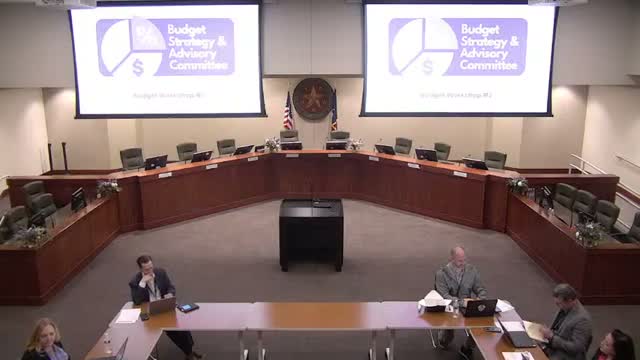
Summary
A community-led Budget Strategy Advisory Committee presented four working-group recommendations to Boerne ISD trustees on March 3, urging operational efficiencies, targeted recruitment and retention measures, new revenue streams (facility naming, rental fees, summer programming) and sustained legislative advocacy.
Boerne ISD trustees on March 3 heard a recap from a community-led Budget Strategy Advisory Committee (VSAC) outlining recommendations to address district funding constraints and growing program needs.
The VSAC, which met five times, organized into four working groups—operational efficiency; retain and recruit quality staff; revenue generation; and reach and impact—and presented concrete proposals trustees can now direct staff to analyze. A committee member summarized the central message: “My biggest takeaway was just really understanding how much Boerne ISD is doing, and how little we're doing it with.”
Operational-efficiency recommendations included researching property-insurance savings, examining transportation use (including shuttle routes and a triple-tier bell schedule), pursuing up to 10% reductions in selected contracted services when contracts next renew, and considering department budget reductions in the 5–10% range. Trustees asked staff for timelines and noted some items (insurance shopping and contract reviews) could move faster than structural changes.
Revenue-generation ideas ranged from studying programming that maximizes weighted average daily attendance to policy changes around so-called “golden pennies” in the state funding formula. The revenue group suggested increasing facility rental fees, pursuing naming/advertising rights for facilities, raising student-parking fees, exploring fee-based summer academic programming and examining fees for in‑district transfers. In discussion, staff said district policy already differentiates rental charges by user type (for example, community youth groups versus for‑profit programs) and that contract and insurance terms will be reviewed.
The retain-and-recruit group prioritized investing in teacher professional development, exploring health‑coverage options tied to TRS ActiveCare participation, and considering a special‑education stipend to better staff hard-to-fill special‑education assignments. Trustees pressed which recommendations could be implemented quickly; staff identified several administrative changes that could be deployed in the near term and said larger initiatives would require additional planning and stakeholder outreach.
The Reach & Impact group recommended a public‑facing advocacy program—website pages, “Bills to Watch,” infographics and video—so the community and legislators better understand the district’s funding position. Staff noted recent joint visits to the state Capitol with neighboring districts and said digital materials would be made available to trustees.
Next steps: trustees asked staff to run scenario analyses, provide cost and timing estimates for quick wins, and return recommendations for board consideration. The board’s next budget workshop is scheduled for April 7, when staff will present program-initiative details.
The meeting closed after trustees moved to adjourn; the motion passed by voice vote.