Get Full Government Meeting Transcripts, Videos, & Alerts Forever!
Get email alerts on the Brain Injury Rehab topic
No spam. Unsubscribe anytime.
Committee backs bill to prevent arbitrary limits on brain‑injury rehabilitation
Summary
HB15‑83, as amended, would remove arbitrary insurer time caps on rehabilitation for acquired brain injury and require flexible, medically appropriate treatment; testimony from physicians and multiple families recounted long insurer denials, expensive out‑of‑pocket care and better outcomes from early intensive rehab.
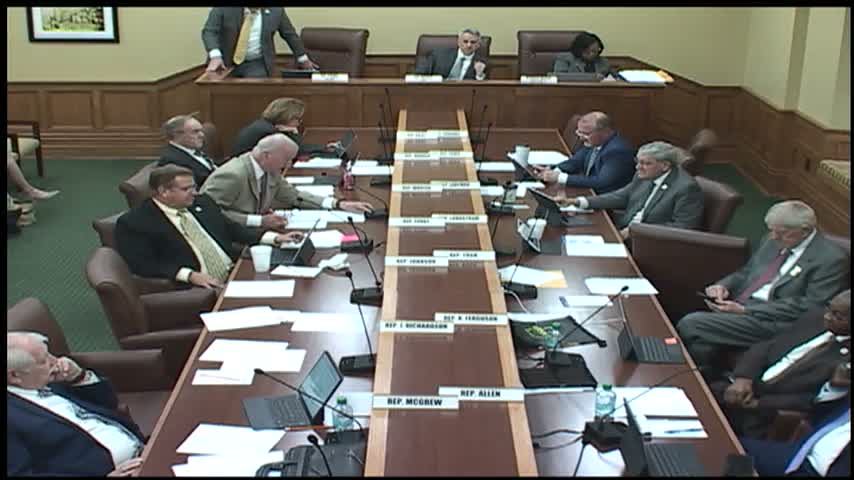
Representative Bentley presented two amendments and the amended HB15‑83 to require health plans to allow rehabilitation for acquired brain injury that is tailored to patients’ clinical needs rather than fixed arbitrary timelines set by insurers. Bentley said the changes were made in coordination with the Department of Human Services and emphasized that insurers should not cut off therapy based solely on a preset session limit.
Dr. Danny Bircher, director of the brain‑injury program at UAMS, testified the clinical evidence supports early, intensive and flexible rehabilitation to optimize outcomes after traumatic brain injury. He and others cited a 'golden‑hour' analogue for rehabilitation, argued that capping therapy reduces potential recovery, and referenced a statewide TBI registry estimate (a CDC‑based figure cited at roughly 46,640 Arkansans with chronic TBI‑related needs) as an order‑of‑magnitude indication of affected people.
Multiple family members offered testimony describing the practical consequences of insurer denials or delays: months of inpatient care, repeated denials for residential rehab or specialized neurorehabilitation, long med‑flight transfers out of state, and heavy out‑of‑pocket expenses (one witness cited roughly $40,000). Families said some patients lost functional progress when therapy was cut off and urged statutory rules that let qualified providers determine medically appropriate duration and intensity of care.
Members questioned cost impacts. Sponsors pointed to Texas precedent, saying premium increases there were reported as minimal while patient outcomes improved; however, the sponsor acknowledged state‑specific actuarial analysis had not been completed in Arkansas. The committee voted to pass the bill as amended after testimony and public comment.
What happens next: The bill moves to the full House; proponents asked the committee to monitor implementation and any regulatory guidance from DHS and the Insurance Department.