Get Full Government Meeting Transcripts, Videos, & Alerts Forever!
Get email alerts on the Transportation topic
No spam. Unsubscribe anytime.
Plano ISD weighs changes to hazardous-route busing and possible end to fare busing amid $18M transportation gap
Summary
District staff presented updated hazardous-roadway definitions and maps and recommended adopting the 2025—6 hazardous-route plan; implementation would discontinue some routes per TASBO guidelines while adding others for retirements and bilingual-program growth, producing a net need for drivers. Staff also proposed discontinuing or restructuring fare busing and said the district faces an estimated $18 million transportation funding gap.
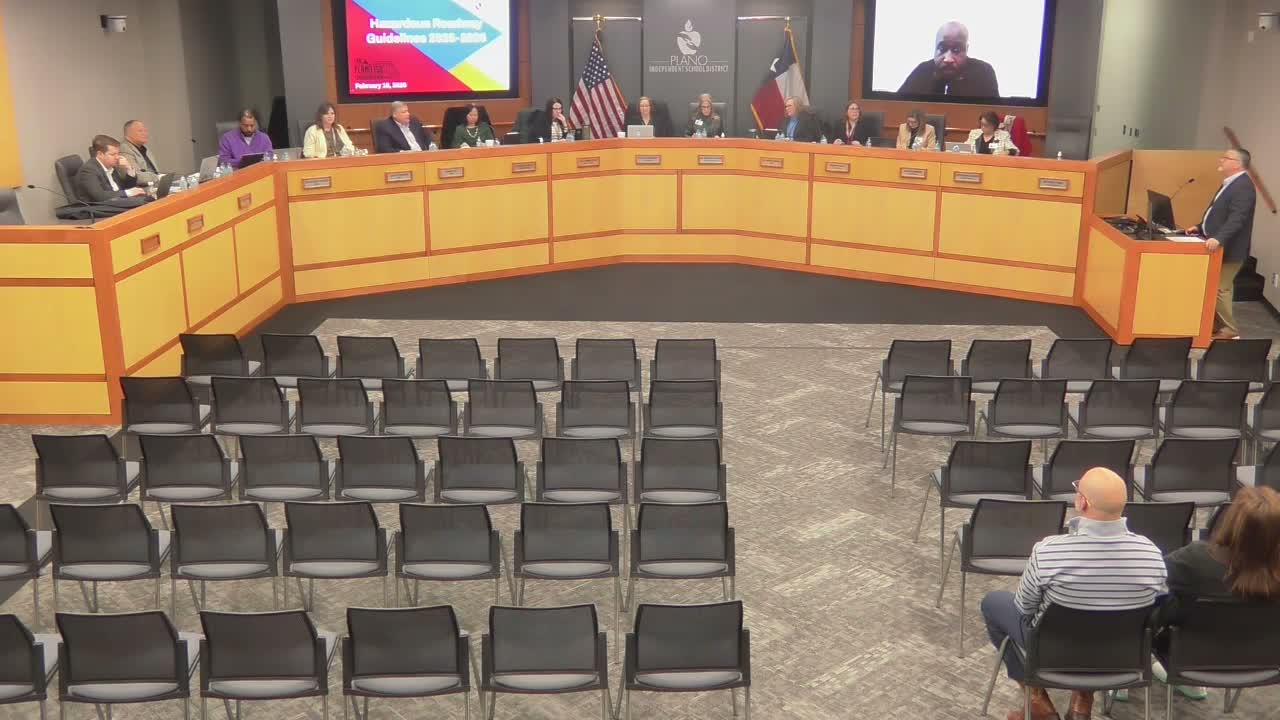
Plano ISD presented an updated hazardous-roadway plan at its Feb. 18 work session and discussed options for discontinuing or restructuring fare busing as a way to address transportation costs.
Steve Ewing, the district's transportation presenter, walked trustees through the updated hazardous-route definitions recommended by the Texas Association of School Business Officials (TASBO): 4- or 6-lane roadways with posted speeds over 45 mph, four- or six-lane roads without a pedestrian-activated signal, active railroad crossings, or segments lacking a safe pedestrian path. Using those guidelines and board feedback from January, staff produced route maps by campus showing eligible riders, estimated daily ridership and proposed changes. Ewing said the new hazardous-route application would discontinue roughly 26 routes while adding routes tied to campus retirements and increased bilingual-program needs; staff estimated a net need for about 21 additional bus drivers driven by those changes.
On fare busing, the presentation noted TASBO recommends discontinuing district-funded fare busing because of inequities and cost inefficiencies. Ewing said one operational alternative would be to allow fare riders to occupy open seats on existing, approved routes (the "original intent") where capacity exists, rather than adding new routes. He cautioned that measuring true ridership for any restructured fare-busing plan would require observing routes through the fall (he suggested waiting until October to establish stable ridership counts). He also said the district is piloting on-bus badge/software technology to ensure assigned students are boarding the correct buses and to help enforce assignment boundaries.
Trustees asked about timing and communications. Ewing said staff would prepare an aggressive communication plan if the board adopts the plan; the earliest possible board vote to adopt the hazardous-route plan would be March, with communications to families to follow. Board members and staff noted transportation is not fully funded by state allotments; Danny (legislative/finance staff) and others reiterated the district has an approximate $18 million transportation funding gap that staff is analyzing as part of its recommendations.
No final board vote on fare busing took place on Feb. 18; staff presented recommendations and said they would return with a final plan for consideration.