Get Full Government Meeting Transcripts, Videos, & Alerts Forever!
Get email alerts on the Conservation Subdivision topic
No spam. Unsubscribe anytime.
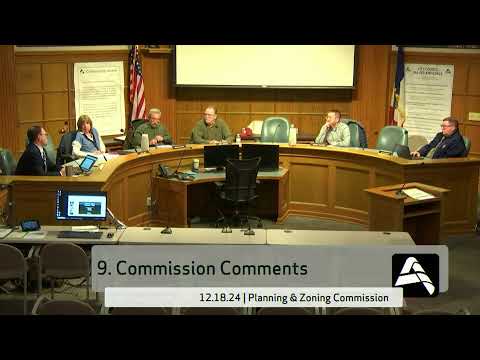
Commission backs conservation-subdivision changes with enhanced stormwater requirements near Ada Hayden
Summary
The commission recommended a text amendment removing a supplemental 25% open-space numeric requirement in conservation subdivisions within the Ada Hayden watershed, adding a 10% base open-space standard, clarifying jurisdictional wetland handling, and requiring a 'treatment-train' of stormwater practices to offset water-quality impacts; the motion passed by voice vote.
Unidentified Speaker 9 presented proposed changes to the conservation subdivision ordinance that would remove a supplemental 25% open-space numerical set-aside (leaving the city's standard 10% open-space requirement), clarify that the ordinance applies to jurisdictional wetlands (those under Army Corps permitting), and introduce enhanced stormwater best-management practices aimed at protecting Ada Hayden Lake.
Staff explained the rationale: removing strict numeric quotas offers flexibility for development while requiring clear access to conserved natural areas, pedestrian connectivity, and dispersed conservation areas across subdivisions. To offset potential increased runoff from higher density, the draft requires a treatment-train approach—multiple BMPs in series—with staff saying "when you use practices in a treatment train, multiple different practices, you can achieve up to, you know, in some cases, 80% removal of total suspended solids from runoff." The ordinance also clarifies mass-grading prohibitions in conservation areas, with public-works-approved exceptions for restoration or critical infrastructure.
Commissioners pressed staff on how nonjurisdictional wetlands are treated and whether the consultant's model showed the offsets would be equivalent to preserved open space. Staff said the ordinance will explicitly reference jurisdictional wetlands and that the consultant evaluated density increases and BMP designs; staff concluded the BMPs and treatment-train approach should offset water-quality impacts, though some detention area increases may be needed.
Staff also clarified maintenance responsibilities: routine BMP maintenance is expected of homeowners associations; the city would address infrequent, large-scale capacity issues and could assess costs back to responsible parties. A motion to recommend city council adopt the text amendment (attachment C) was moved and seconded, and commissioners voted by voice to approve the recommendation; staff will finalize language with the city attorney before submitting to council.
The amendment emphasizes restoring and protecting meaningful conservation areas rather than retaining artificial green-space set-asides used only to meet numeric thresholds.