Get Full Government Meeting Transcripts, Videos, & Alerts Forever!
Get email alerts on the Hb 3457 topic
No spam. Unsubscribe anytime.
Hundreds testify as South Carolina subcommittee hears debate over near‑total abortion ban
Summary
The House Constitutional Law Subcommittee heard hours of public testimony for and against HB 34‑57 (the Human Life Protection Act). Medical groups warned the bill would endanger patients and worsen OB‑GYN shortages; supporters urged the measure to 'protect life.' No committee vote was taken.
The South Carolina House Constitutional Law Subcommittee convened a lengthy public hearing on HB 34‑57, the Human Life Protection Act, where hundreds of residents, medical professionals and advocates offered largely opposing testimony but the committee took no vote.
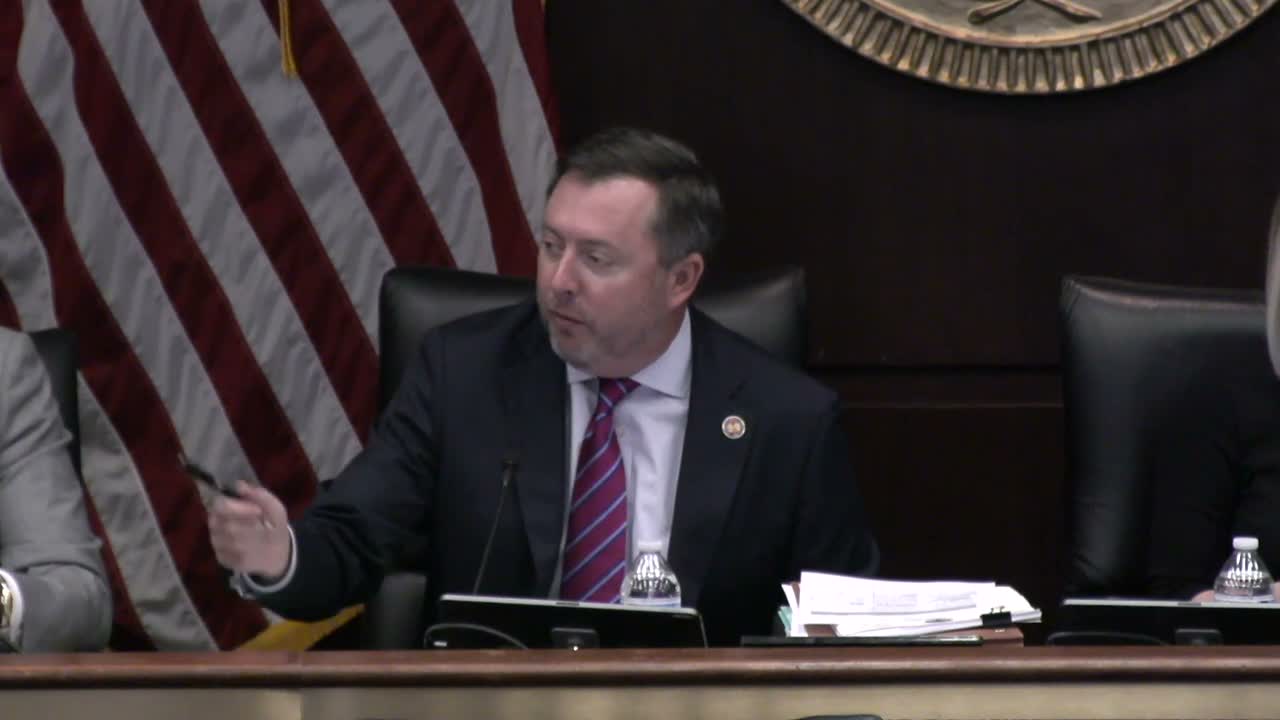
Chair Jay Jordan opened the session by saying the meeting was intended to gather public comment and that committee members would not necessarily advance the bill that day. Supporters argued the measure recognizes life at conception and would stop abortion being used as birth control, while opponents — including many practicing obstetricians, pediatricians and public‑health advocates — said the proposed law would criminalize medical care, worsen the state’s maternal‑health crisis and force patients to seek care out of state.
Opponents emphasized clinical and safety concerns. Dr. Casey Eichelberger, a maternal‑fetal medicine physician, said the bill would remove families’ ability to choose management for lethal fetal anomalies and would ‘take away the agency of a family to choose how and when to mourn.’ Dozens of OB‑GYNs and representatives of medical organizations told the panel the law’s criminal penalties create delays in time‑sensitive care and are already prompting clinicians to consider leaving the state. Dr. Patricia Seal, chair of the South Carolina section of the American College of Obstetricians and Gynecologists, said the state’s OB‑GYN workforce is shrinking and warned the bill would worsen access to routine and emergency care.
Witnesses cited data and clinical examples. Testimony cited state and national statistics on maternal mortality and the timing of abortions, and multiple clinicians described cases they said reflected the practical harms of restrictive laws. Dr. Sydney Rush recounted a patient she called “Taylor,” a 19‑year‑old with sickle cell disease who presented in crisis and later died; Rush said restrictive laws had constrained options for timely intervention.
Supporters framed the bill as moral and constitutional. Backers including faith leaders and grassroots activists urged the subcommittee to pass the broad ban, arguing it would protect unborn children and citing prior measures such as South Carolina’s heartbeat law. Representative John McCravey, the bill’s sponsor, said the measure preserves specified exceptions for the mother’s life and does not change current law regarding contraception or IVF, and he asked members to advance the measure.
The hearing featured sharply worded exchanges and emotional personal stories from both sides. A public commenter asked supporters on the panel to publicly justify forcing a rape‑impregnated child to carry a pregnancy to term; elsewhere proponents quoted scripture and public‑health arguments in support of ending abortion. Several witnesses urged the legislature instead to invest in maternal‑health care, expand contraception access and strengthen supports for children and families.
No formal committee action occurred. Chair Jordan adjourned the subcommittee shortly after noon without a vote; members and the sponsor indicated they may continue work on the proposal at a later date. The subcommittee collected written comments and testimony submitted to the committee’s email for further review.
What’s next: Representative McCravey asked the panel to move the bill forward; the committee did not vote and offered no date for additional consideration.