
Caltrans outlines Topanga Boulevard repaving plan, warns schedule depends on Edison undergrounding
Get AI-powered insights, summaries, and transcripts
Subscribe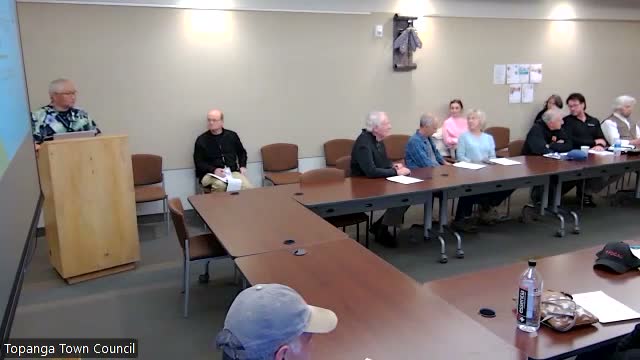
Summary
Caltrans presented a Capital Preventive Maintenance project for Topanga Boulevard that uses rubberized asphalt and targets a July 2026 completion for the full corridor; work in some canyon sections is suspended until Southern California Edison finishes underground trenching, and residents pressed for at least six weeks' notice before work starts.
Caltrans told Topanga residents on Sept. 10 that it plans a multi‑phase repaving of Topanga (Tobinger) Canyon Boulevard using a 2‑inch grind and a rubberized‑asphalt overlay designed to extend pavement life and reduce road noise. Jim, an assistant division chief leading the program, said the work includes bus pads, guardrail replacement and vegetation control and that the agency is aiming to complete the overall project by July 2026.
The agency emphasized coordination challenges with Southern California Edison (SCE). Caltrans said SCE is undertaking a separate three‑phase undergrounding program; Phase 1 trenching must be finished before paving in some sections, and phases 2 and 3 have not yet submitted firm plans. "We are trying to finish this job as soon as we can, but it'll be, like, July of 2026 to complete the entire stretch," Jim said, adding that Caltrans lifted a suspension for valley portions (from PCH to Happy Trail) but that canyon sections remain tied to Edison’s timeline.
Residents pressed Caltrans on environmental and local impacts. Questions included particulate matter from grinding, expected noise limits for night work and how grinding and overlaying would affect driveway grades. Caltrans said rubberized asphalt must be laid when air and pavement temperatures are sufficient (around 50°F or higher), which makes much of the paving seasonal and increases the likelihood that the bulk of surface work will occur in spring and summer. The agency agreed to provide noise and particulate specifications and the project Gantt chart to the community.
Business owners and residents warned that trenching after repaving would waste public funds and harm local commerce during peak holiday months. One resident requested at least six weeks' advance notice of any restart or new phases; Caltrans said its public information officer will work with the resident engineer to improve advance notifications and send schedule updates through the town council distribution list.
Caltrans acknowledged it cannot stop SCE’s grid work and said it will try to coordinate sequencing to minimize rework. The presentation included estimates of production rate (roughly a mile per lane per night under ideal paving conditions) and repeated that rubberized asphalt is quieter and longer‑lasting but must be applied under temperature constraints. Next steps include Caltrans sharing technical noise/air quality specs, coordinating with SCE and convening follow‑up community briefings planned for December and January.