Get Full Government Meeting Transcripts, Videos, & Alerts Forever!
Get email alerts on the Code Enforcement Vacant Buildings topic
No spam. Unsubscribe anytime.
Council introduces revised vacant‑building ordinance with longer timelines and council appeal
Summary
Eureka council introduced an updated vacant‑building ordinance Aug. 20 after extended debate and amendments: many 30‑day timelines were lengthened (commonly to 60–90 days), a 'good faith' listing standard was added, and a city council appeal step was retained after the city manager. The ordinance was introduced for further refinement and adoption at a later hearing.
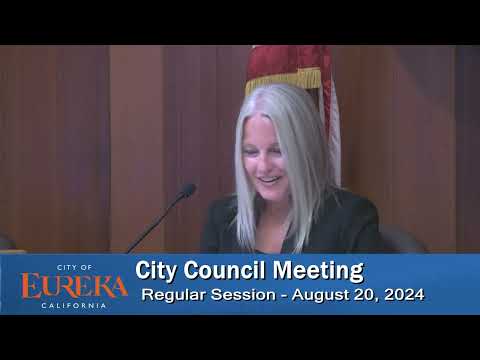
Eureka City Council on Aug. 20 voted to introduce a revised vacant‑building ordinance (proposed ordinance 1038‑CS) after several hours of discussion and amendments that extended many of the notice and response timelines.
City Attorney Luna said the draft broadened the definition of "vacant" to include vacant units within otherwise occupied buildings and added a hardship clause to allow exceptions where implementation would be inconsistent with other city policy. Councilmembers raised concerns that some 30‑day timeframes were too short for property owners to respond, asked staff to insert a "good faith" test for active listings and discussed the equity of flat fine schedules.
After public comment — including input from commercial broker Scott Pesch, who cautioned against over‑penalizing landlords during economic downturns — council members proposed and agreed on a set of amendments: extending many 30‑day deadlines to 60 days, making certain vacancy thresholds 90 days in a few places, adding a city council appeal step after the administrative city manager decision, and inserting a "good faith" requirement for listings. The motion to introduce the ordinance with those amendments passed at the meeting; staff will return with final code language, implementation details and a proposed fee schedule for adoption.
What changed in the introduction: - Multiple 30‑day notices (registration/response) increased (many to 60 days; some appeal windows to 30 days; the property vacancy definition extended to 60–90 days as amended at introduction). - Language to require that properties be offered for lease/sale "in good faith" was added to address concerns about artificially inflated listing prices. - The administrative appeal will include a city council review after a city manager decision.
Next steps: staff will revise the ordinance text to reflect council edits, prepare an implementation and fee schedule for council review, and bring the ordinance back for adoption at a future meeting.