Get Full Government Meeting Transcripts, Videos, & Alerts Forever!
Get email alerts on the Housing topic
No spam. Unsubscribe anytime.
Humboldt COG details REAP-funded housing outreach, explores regional housing trust fund
Summary
Humboldt County Association of Governments told the Eureka City Council it used a roughly $800,000 REAP grant for regional planning and a KEYS outreach campaign; HCOG said a proposed regional housing trust fund is in early planning and could leverage local matching funds and possible offshore-wind community contributions.
Beth Barks, executive director of the Humboldt County Association of Governments (HCOG), told the Eureka City Council on Aug. 6 that HCOG’s Regional Early Action Planning (REAP) grant work focused on planning tools and public education meant to accelerate housing production across the region.
"We received about $800,000," Barks said, describing the grant as formula funding that arrived in 2020 amid COVID delays. She said suballocations funded local outreach—"the city of Eureka received about $15,000"—and regional work such as a climate action plan and vehicle‑miles‑traveled analysis intended to streamline future environmental review for developments.
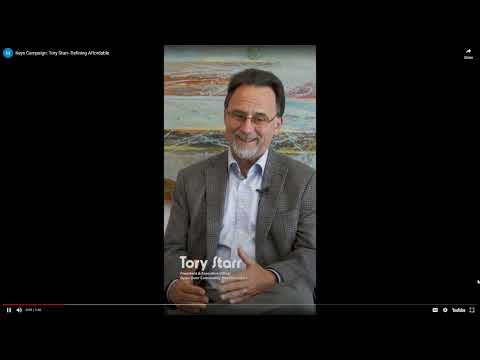
Barks said HCOG used remaining grant funds to run the KEYS campaign, a social‑media effort on Facebook and Instagram that paired graphics, videos and infographics with local outreach. She said the campaign reached roughly 40,000 impressions on social platforms and about 30,000 interactions, and highlighted a key statistic the campaign sought to normalize: "35% of people in our region are cost burdened." The presentation included short videos and a toolkit HCOG plans to keep sharing even after the grant ends.
On a separate but related initiative, Barks outlined early-stage plans for a regional housing trust fund. She described the fund as a potentially useful vehicle to underwrite predevelopment, matching funds, infrastructure or other gap financing across jurisdictions, and said it could make the region more competitive for state matching dollars. Funding models mentioned included transient‑occupancy taxes and recording‑fee levies; the work so far is conceptual, with staff recommending a consultant‑driven work plan as a next step.
Council members asked whether HCOG had jurisdiction‑specific cost‑burden data (Barks said much of that detail is available in each jurisdiction’s housing element), and whether the city could repost HCOG materials on city pages (city staff said they would coordinate and post links). Barks encouraged continued local sharing of the campaign templates as a low‑cost way to sustain outreach once the grant ended.
The presentation concluded with Barks saying HCOG’s board had discussed a regional housing trust fund and could potentially administer it if the idea moves forward; she called the effort still "very much in its infancy."