Get Full Government Meeting Transcripts, Videos, & Alerts Forever!
Get email alerts on the Vacant Buildings topic
No spam. Unsubscribe anytime.
Eureka adopts new vacant-building ordinance after lengthy debate; vote 3–2
Summary
The Eureka City Council voted 3–2 to adopt Ordinance No. 1038-CS, replacing portions of Title 15 to strengthen rules and penalties for vacant commercial, industrial and residential buildings. Council members and members of the public disputed timelines, fee amounts and enforcement capacity during extended debate.
Eureka — The City Council adopted Ordinance No. 1038-CS on a 3–2 vote after more than an hour of public comment and council discussion about enforcement, fines and whether the rules would unfairly burden property owners.
City Attorney Luna, summarizing revisions to the draft ordinance, told the council that several timelines were lengthened since introduction: “In section 150.097, b, we had a change from 30 days to 90 days,” and other sections were changed from 30 days to 60 days, and penalty language was simplified in some places to a $1,000 administrative amount. Luna also said the ordinance adds a right for owners to appeal a manager’s decision to council.
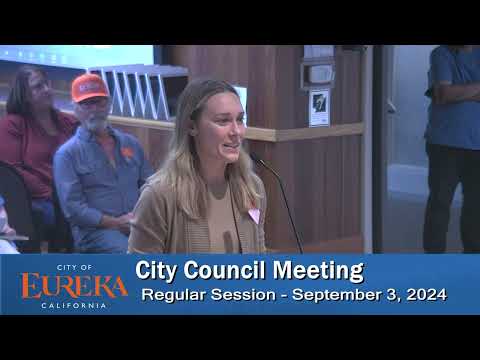
Supporters said the ordinance fills gaps in existing code and gives the city a structured tool to address blight. Rilena Crickston, a newly minted building owner, told the council the measure is “a proactive and essential measure for our community’s development” and urged the city to direct any fines or fees toward housing or building-front improvement programs.
City staff and some council members raised practical concerns about enforcement capacity and the ordinance’s design. Public Works Director Gerving and code enforcement representatives said the city already monitors vacant and boarded properties and that the new rules “would add to that load, on our code enforcement staff” and likely increase casework. Staff said most enforcement will remain complaint-driven, but added that monitoring fees will be set in the fee schedule and fines in the ordinance are intended to be punitive enough to deter noncompliance.
Opponents warned that the ordinance risks punishing owners who legitimately cannot quickly re-occupy or repair property, noting examples such as bank-owned or out-of-state-owned parcels that sit fallow. One phone-in commenter recommended incentives rather than fines and said the private market, not government mandates, should solve vacancy problems.
Council debate focused on three fault lines: whether the ordinance would meaningfully reduce vacancies, how the city calculated the proposed fines and fees, and whether the single ordinance should govern both commercial and residential properties. Council Member Moulton moved to waive full reading and adopt the ordinance; the motion was seconded and passed 3–2. Council Members Bauer and Contreras Deloshe voted no.
The ordinance replaces sections of Title 15 (150.095–150.097) with updated language. Under the adopted version, city staff will implement monitoring and fee schedules, and the council discussed directing revenue toward housing‑related uses or crime‑prevention and beautification programs.
Next steps: the ordinance becomes the city’s governing code on vacant buildings as codified; staff said implementation will rely on the existing code-enforcement process and on the fee schedule to be finalized by staff and adopted administratively.