Get Full Government Meeting Transcripts, Videos, & Alerts Forever!
Get email alerts on the Budget topic
No spam. Unsubscribe anytime.
Soledad council adopts FY2024–25 budget, master fee schedule and related measures
Summary
Council adopted the FY2024–25 budget, a CPI‑adjusted master fee schedule and related resolutions. Staff warned of rising PERS costs, infrastructure needs and Measure Y’s future sunset; council emphasized outreach and potential revenue strategies.
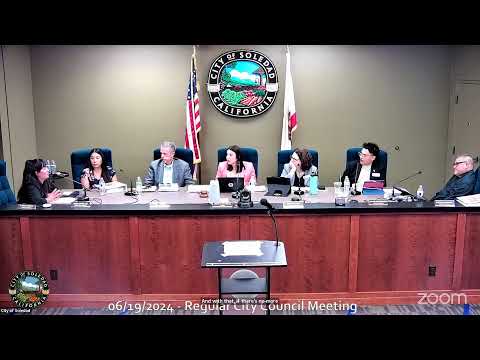
The Soledad City Council unanimously adopted the FY2024–25 budget and the city’s master fee schedule on June 19 after a detailed presentation from finance staff.
Finance staff presented an all‑fund operating budget figure (staff cited the total operating budget across funds at approximately $47.5 million) and a general fund budget of about $15 million. Staff highlighted that public safety (police and fire) accounts for a majority of general fund expenditures and that the city faces mounting capital needs and pension (PERS) pressures. The master fee schedule incorporates a CPI adjustment (staff cited 3.8%).
Staff reiterated the city maintains reserves and a general‑fund capital improvement balance set aside for future projects; at the same time, deferred maintenance and potential future CAL FIRE staffing increases are budgetary risks. The presentation reviewed enterprise funds (water, wastewater, solid waste and sanitation), with wastewater carrying substantial capital needs and debt service obligations.
Council members pressed staff on outreach to residents, transparency for Measure Y and Measure S revenues, the potential for parcel tax options to fund public safety and specific program allocations (for example, park reservations and the resident field use fee). Staff clarified that field reservation fees are for reservations; spontaneous use of parks by residents remains free.
Council adopted the budget and related resolutions by unanimous vote, and directed staff to continue grant pursuits, update the PERS impact analysis when new actuarial information is released, and pursue public engagement on potential revenue measures and oversight.