Get Full Government Meeting Transcripts, Videos, & Alerts Forever!
Get email alerts on the Public Safety topic
No spam. Unsubscribe anytime.
Soledad approves one‑year CAL FIRE contract and forms ad hoc committee to find long‑term funding
Summary
The city approved a one‑year cooperative agreement with CAL FIRE to continue fire protection services while staff pursues grants and revenue options; discussion focused on moving to 3‑person engine staffing, the ladder truck program and possible parcel tax or SAFER grant support.
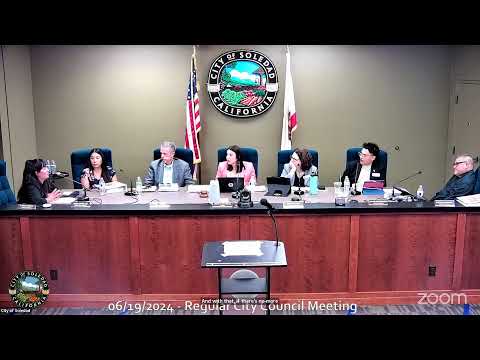
The Soledad City Council unanimously approved a one‑year cooperative agreement with the California Department of Forestry and Fire Protection (CAL FIRE) on June 19 to maintain fire protection services while the city seeks a sustainable funding plan for longer‑term staffing increases.
Staff and CAL FIRE representatives told the council that CAL FIRE’s statewide staffing standard will require many contract partners to move toward a 3‑person engine staffing model (commonly described as 3‑0 staffing). For Soledad that shift would require additional personnel and would substantially increase the contract cost in years two and three. Battalio n Chief Jason Lukenbach and city staff described the operational need: 3‑person staffing is an industry standard for ladder truck response and personnel safety.
City staff said they were unable to commit to a three‑year contract at this time because the jump in cost between year one and year two (to meet 3‑0 staffing) could exceed the city’s current budget capacity. Negotiators secured a one‑year term and a side‑letter provision to change the contract’s automatic‑notice timeline so the city will have six months (rather than one year) to notify CAL FIRE about renewal — giving staff more time to explore funding options before committing to a multi‑year obligation.
Staff and council discussed potential revenue sources to bridge the longer‑term cost, including applying for SAFER grants (federal staffing grants) and exploring a parcel tax; staff said the city has applied for SAFER funding and is investigating other options, but federal grants are temporary and the city will need a permanent local revenue source to sustain staffing increases. The council directed staff to continue pursuit of grant funding and to develop a strategic plan; members agreed to form an ad hoc subcommittee to work with staff on revenue options and public outreach.
Council members stressed the urgency of planning for year‑two costs if grant support is not forthcoming. The contract that the council approved was presented in staff materials with a not‑to‑exceed amount in the low millions and staff described the recommended one‑year agreement as fiscally manageable for FY2024–25; council did not change the contract amount at the meeting.
The motion to approve the one‑year contract carried unanimously. Council also requested frequent updates on grant results and on options such as a parcel tax, regionalization or joint powers arrangements that could reduce per‑jurisdiction costs for fire services.