Get Full Government Meeting Transcripts, Videos, & Alerts Forever!
Get email alerts on the Housing topic
No spam. Unsubscribe anytime.
Soledad council approves Miravalle amendment to add 40 multifamily rental units, prompting parking concerns
Summary
The council approved an amendment to the Miravalle Planned Unit Development to increase multifamily units and building height to secure tax-credit financing for 40 rental units, while reducing on-site parking from 54 to 50 spaces; council members and residents pressed the developer on parking, accessibility and timing.
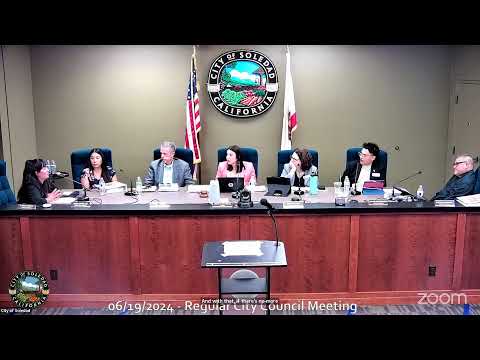
The Soledad City Council voted 3–2 on June 19 to approve an amendment to Planned Unit Development Permit No. 2018‑2 (Miravalle, Parcel E) that increases the height and number of multifamily rental units so the project can pursue tax-credit financing with Eden Housing and the applicant team.
The amendment raises the multifamily building height from 30 feet to 40 feet to add units that make the federal/state tax‑credit application feasible and changes the approved mix of housing. Under the amendment the site will include 40 multifamily rental units alongside the previously approved 104 townhomes, for a total of 144 units on the 8.5‑acre parcel — still within the original density cap for the subdivision, staff said.
Nana Mora, an associate (planning staff), told the council the change was sought to meet California Tax Credit Allocation Committee thresholds and allow more lower‑income rentals. Eden Housing’s Stacy Lara Bals said the developer has committed corporate dollars, that the land will be sold to Eden for $1 and that the amendments are “threshold items for the tax credit allocation application.” She clarified the current application would be for tax credits and state allocation rounds, not federal grant entitlements.
Council discussion focused on parking and neighborhood impacts. The proposed amendment reduces parking on the multifamily portion from 54 spaces to 50 to make room for required amenities — a fenced playground, community room and bike room — that tax‑credit rules favor. Staff and the applicant said the project still meets the city’s overall density and that street parking on Santa Clara will continue to be available in places, and that accessible units (for residents with mobility challenges) will be located on ground floors.
Councilmembers and members of the public raised concerns that the reduced on‑site parking could create spillover demand on nearby streets and affect quality of life. Eden Housing said the housing mix will include studios, one‑bedroom units, and two‑ and three‑bedroom units (the developer stated approximately half the 40 units would be two– and three‑bedrooms) and that the applicant is exploring whether additional parking could be squeezed into the design during civil engineering review.
The planning commission reviewed the application and recommended approval 3–1, citing concerns about parking and egress. Council members who voted for the amendment framed the change as a way to bring deeper affordability to Soledad — adding very low‑income units the city has not produced in recent years — and emphasized staff will work with transit (MST), enforcement and other tools to reduce parking impacts.
The council recorded the vote as 3 in favor and 2 opposed; the meeting transcript does not record the roll‑call lineup for yes/no votes. The project team said, if awarded tax credits, construction could begin roughly within 180 days of award and ground‑breaking could occur as early as summer next year, subject to financing and permitting.
The council conditioned the approval on the conditions and findings in the staff report; the project remains subject to the terms of the previously certified environmental review and project conditions.
The council’s action advances an affordable rental project the city hopes will expand deep‑affordability options for Soledad households and help meet housing goals; opponents and some council members said the city must continue to address on‑street parking and neighborhood services as construction moves forward.